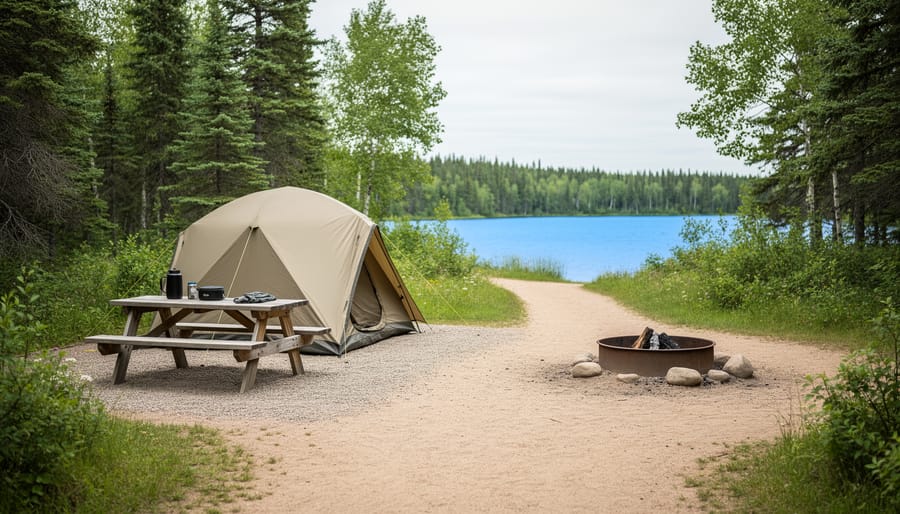
Riding Mountain National Park offers six distinct campgrounds ranging from the fully serviced Wasagaming Campground, steps from the beach and townsite, to remote backcountry sites at Whirlpool Lake and Lake Audy. Booking opens in January through Parks Canada Reservations online or by calling 1-877-737-3783, and this summer, from June 19 to September 7, 2026, you’ll pay nothing for park admission plus receive 25% off all camping fees. Standard adult admission runs $10.00 and seniors pay $8.75 outside the free period, but youth enter free year-round.
Most campers choose Wasagaming for good reason. You can walk to restaurants, the Visitor Centre, canoe rentals, an 18-hole golf course, and the main beach without moving your vehicle. The pier and playground sit minutes away, and trailheads for hiking and biking fan out from the townsite. For those seeking quieter forest camping in Canada Deep Lake, Moon Lake, and Whirlpool Lake (15 kilometres from Wasagaming on Highway 19) deliver solitude and wildlife encounters. Lake Audy campground and its adjacent horse corral attract equestrian campers and bison watchers who want the grassland experience.
Sarah from Winnipeg told us her family books Wasagaming each August because her kids bike to the beach each morning while she enjoys coffee on the campsite. Mark, a solo hiker from Brandon, prefers Moon Lake in September when the aspens turn and the trails empty out. Both strategies work because Riding Mountain serves every camping style, from families wanting amenities to adventurers chasing backcountry silence. This guide walks you through each campground’s character, the 2026 discount details, reservation tips, and what to pack for Manitoba’s boreal forest.
The Six Campgrounds at Riding Mountain National Park
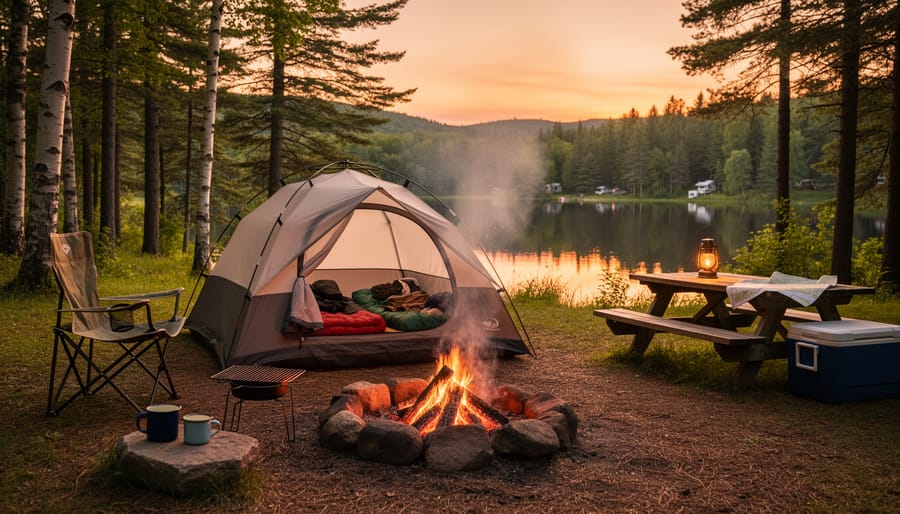
Riding Mountain National Park offers six campgrounds in Riding Mountain that cater to different camping styles, from full-service sites near town amenities to remote lakeside retreats deep in Manitoba’s boreal forest. Whether you want a short walk to restaurants and showers or a secluded spot to wake up to loon calls, you’ll find an option that fits.
Wasagaming Campground sits at the heart of the park, steps from the Visitor Centre, beach, and all the townsite conveniences. If you want flush toilets, hot showers, and the option to grab breakfast at a café, this is your spot. Families with young kids and first-time park campers often gravitate here for the predictability and easy access to activities.
The four lakeside campgrounds, Deep Lake, Moon Lake, Whirlpool Lake, and Lake Audy, shift the experience toward quiet and nature immersion. Whirlpool Lake, located 15 km from Wasagaming on Highway 19, offers a middle ground with road access but fewer crowds. Deep Lake and Moon Lake are more isolated, appealing to paddlers and anglers who want distance from the townsite buzz. Lake Audy draws wildlife watchers hoping for bison sightings at the nearby enclosure.
Lake Audy Horse Corral is built for riders who trailer in with their own horses. It includes corrals, hitching posts, and direct trail access, making it the only choice if you’re planning an equestrian camping trip.
Each campground brings a different slice of Riding Mountain’s character. Start by asking yourself what matters most, comfort and convenience, or space and wildlife, and the right campground will become obvious.
Wasagaming Campground: Gateway to Townsite and Trails
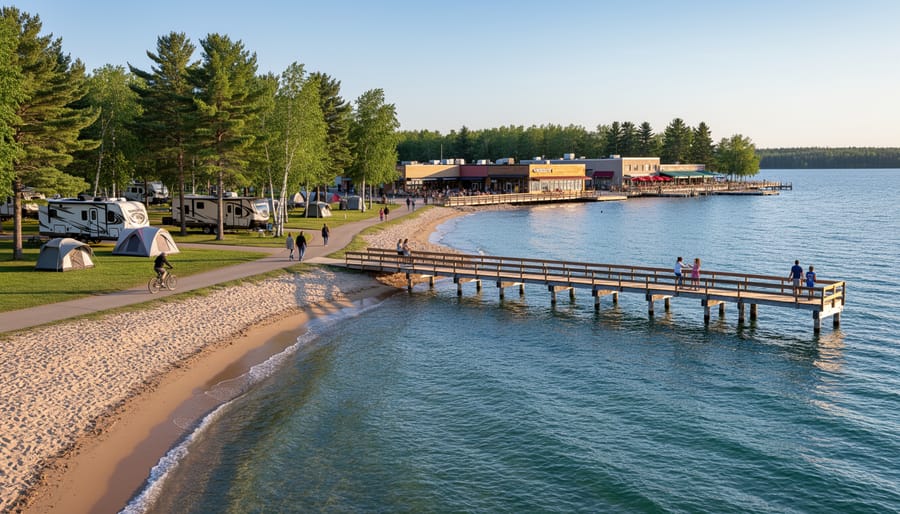
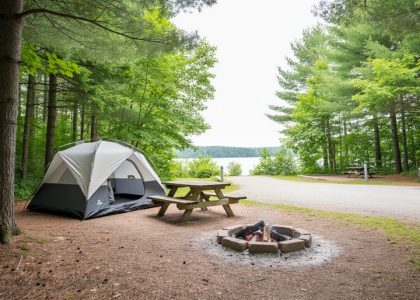
Wasagaming Campground sits at the heart of Riding Mountain’s main hub, a short stroll from the historic townsite that bears its name. You can walk to the Visitor Centre, grab breakfast at a local café, or wander down to the main beach and pier, all without moving your vehicle. That convenience makes Wasagaming the campground of choice for families with young children, first-time campers who appreciate nearby support services, and anyone who wants forest camping without giving up amenities.
The campground itself offers electric hookups at many sites, flush toilets, showers, and a central kitchen shelter. Beyond those basics, the real draw is access. Within minutes you reach the playground area, tennis courts, and lawn bowling greens. The 18-hole golf course borders the park’s southern edge. Canoe, kayak, and bike rentals operate nearby, and trailheads fan out from the townsite into the boreal forest, so day hikes start practically at your tent door. Restaurants, shops, and a laundromat round out the picture, this is the only campground in the park where you can restock supplies or enjoy a sit-down meal without a drive.
Who thrives at Wasagaming? Families who want structured activities and easy access to swimming. Retirees who prefer paved paths and predictable facilities. Campers testing their comfort level before venturing deeper into backcountry sites. The trade-off is density and noise: summer weekends fill the loops with kids on bikes and evening campfires, and you’ll hear your neighbours.
A couple from Winnipeg told me they return to Wasagaming every June because their eight-year-old twins can bike to the beach independently while they prep lunch. “We camp for the outdoors, but we’re not roughing it,” the father said. “One morning the kids played mini-golf, we hiked the Ominnik Marsh trail in the afternoon, and we had pizza in town that night. That balance works for us.”
If you want solitude or a true remote feel, look elsewhere in the park. But if you value convenience, infrastructure, and the ability to shift between wilderness and townsite comforts on a whim, Wasagaming delivers.
Remote and Lakeside Options: Deep Lake, Moon Lake, Whirlpool Lake, and Lake Audy
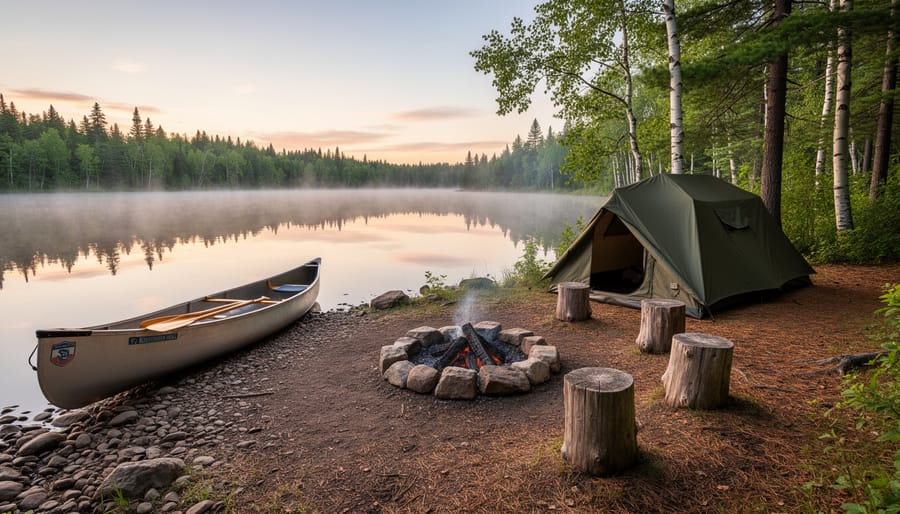
If Wasagaming’s townsite buzz isn’t your style, the four lakeside campgrounds tucked deeper into the forest offer a different kind of Riding Mountain experience. These sites trade convenience for quiet, drawing campers who want distance from crowds and closer encounters with Manitoba’s boreal wilderness.
Whirlpool Lake sits on Highway 19, about 15 kilometres from Wasagaming. It’s the most accessible of the remote options, reachable by passenger vehicle and still close enough to make a supply run if you forget something. The campground hugs the lake’s edge, with sites shaded by spruce and aspen. Expect basic amenities, vault toilets, fire pits, picnic tables, but no electrical hookups or showers. The lakeshore is calm and shallow, ideal for launching a canoe at dawn when mist hangs over the water and the only sound is the splash of a paddle.
Deep Lake and Moon Lake push farther into the backcountry, accessible via gravel roads that can get rough after heavy rain. These campgrounds see fewer visitors, which means you’re more likely to spot elk grazing at dusk or hear the eerie call of a common loon after dark. Facilities remain minimal, so pack everything you’ll need for a self-sufficient stay. One camper I spoke with described waking at Moon Lake to fresh moose tracks circling her tent, a thrill for wildlife enthusiasts, less so for nervous first-timers.
| Campground Name | Distance from Wasagaming | Setting/Character | Best For |
|---|---|---|---|
| Whirlpool Lake | 15 km on Hwy 19 | Lakeside, forested, accessible | Families seeking quiet, paddlers |
| Deep Lake | Remote (gravel access) | Backcountry feel, wildlife corridors | Experienced campers, solitude seekers |
| Moon Lake | Remote (gravel access) | Secluded, boreal forest, quiet shores | Wildlife watchers, photographers |
| Lake Audy | Northwest section | Open prairie-forest edge, bison herd nearby | Nature enthusiasts, rustic campers |
Lake Audy occupies the park’s northwest corner, where forest meets open prairie. The main draw here is proximity to the Plains Bison Herd, you can drive or hike to the viewing area and watch dozens of these massive animals graze. The campground itself is simple, with basic sites and a no-frills vibe that attracts campers comfortable with solitude and long stretches between amenities.
Lake Audy Horse Corral is a separate area designed for equestrian campers. Bring your own horse, book a corral stall, and explore the park’s horse-friendly trails directly from your site. It’s a niche option, but for riders who want to combine camping with multi-day trail rides through the forest, it’s a rare setup among camping locations in Canada.
All four of these campgrounds reward preparation. Cell signal is spotty to nonexistent, so download maps and Parks Canada alerts before you leave Wasagaming. Bring enough water, food, and firewood for your entire stay, and pack layers, nights cool off even in July. If you’re after wildlife photography, the loon calls echoing across Moon Lake, or the feeling of being genuinely far from everything, these remote sites deliver in ways the townsite campground can’t.
2026 Camping Fees and the Free Admission Period
Understanding the cost of camping at Riding Mountain National Park helps you budget your Manitoba wilderness getaway. The 2026 season brings a special opportunity that makes it the most affordable year in recent memory to explore this forest landscape.
Standard admission fees follow Parks Canada’s structure. Adult, senior and youth fees are set at $10.00 for adults (ages 18 to 64), $8.75 for seniors (65 and older), and free for youth (17 and under). These rates apply per person, per day, and grant access to all park trails, beaches, and facilities.
The real news for 2026 is the summer promotion. From June 19 to September 7, Parks Canada is offering free admission and 25% off camping and overnight fees across the park. That means families pay nothing to enter, and your nightly campground rate drops by a quarter for the entire summer window.
For a family of four planning a week at Wasagaming Campground, the savings add up fast. Waived admission alone saves $140 over seven days (two adults at $10 each, daily). The 25% camping discount reduces your site fee each night, whether you’re in a basic tent site or an RV spot with hookups. If you’re booking multiple nights at one of the remote campgrounds like Moon Lake or Deep Lake, that quarter-off makes longer stays noticeably more accessible.
This promotion runs through the heart of Manitoba summer, covering the warmest weather and longest days. If you’ve been waiting for the right year to try Riding Mountain, 2026 delivers both financial value and peak season conditions in one package.
How to Reserve Your Campsite for 2026
Securing a campsite at Riding Mountain takes a bit of planning, but the process is straightforward once you know the system. Parks Canada handles all bookings through its centralized reservation platform, and understanding when spots open up, plus acting fast during peak windows, can make the difference between your first-choice site and settling for what’s left.
2026 reservations launch in January though the exact date varies by campground and region. Wasagaming typically opens for booking earlier than the remote sites, so if you’re eyeing a spot near the townsite or planning a trip during the free admission period (June 19 to September 7), mark your calendar for early January and check the Parks Canada site daily. Popular weekends and long weekends fill within hours of opening, especially with the 25% camping discount sweetening the deal this year.
Here’s how to lock in your site:
- Visit the Parks Canada reservations website and search for Riding Mountain National Park. Filter by your preferred campground, dates, and site type (tent, RV, walk-in).
- Book online through the portal or call 1-877-737-3783 (toll-free in North America) or 1-519-826-5391 if you’re outside the continent. Phone lines open at 8 a.m. Eastern, and you’ll wait longer on launch day.
- Review your dates, fees (including the 25% discount if applicable), and any add-ons like firewood bundles or electrical hookups before finalizing.
- You’ll receive a confirmation email with your booking number, site details, and check-in instructions. Print it or save it to your phone, you’ll need it at the gate.
A camper from Winnipeg told us she sets two alarms for reservation day: one to log in, one to remind her partner to call as backup. It sounds extreme, but mid-summer spots at Wasagaming vanish that quickly. If your dates are flexible, weekdays in late June or early September offer better availability and you’ll still catch the discount window. Don’t wait until spring to book, by then, you’re competing for cancellations.
What to Do Around Your Campground
Your campground is just the start. The park’s 3,000 square kilometres of boreal forest and mixed grassland offer enough to fill a week-long stay, whether you’re chasing wildlife sightings or keeping kids entertained with easy day trips.
Hiking trails radiate from all six campgrounds. Wasagaming campers can walk straight onto the Ominnik Marsh Trail for waterfowl viewing or tackle the moderate Grey Owl Trail through mixed forest. From the more remote campgrounds, trails often lead deeper into backcountry with fewer people and better chances to spot elk and black bears. The bison enclosure near Lake Audy draws families year after year, it’s one of the best places in Manitoba to see a wild herd grazing on native prairie, a powerful sight for kids and adults alike.
Paddlers have their pick of lakes. Moon Lake and Whirlpool Lake offer quiet canoeing through narrow channels where moose feed at dawn. Wasagaming Campground sits near the main beach and pier, where you can rent canoes and kayaks if you didn’t bring your own. Fishing for northern pike and yellow perch keeps anglers busy, though you’ll need a Parks Canada fishing permit.
The historic Wasagaming townsite gives families a break from camp cooking. Stroll between shops, grab ice cream, or visit the Visitor Centre for park maps and naturalist talks. Tennis courts, lawn bowling, and an 18-hole golf course add variety if you’re staying longer. For more summer camping ideas and planning tips across Canada, you’ll find good advice beyond what Riding Mountain offers.
If you’re drawn to boating and biking specifically, the park has trails and water access suited to both. Bring binoculars and plan for early mornings when wildlife is most active, elk, white-tailed deer, and over 260 bird species make every outing different.
Camping Essentials and Safety Tips for Riding Mountain
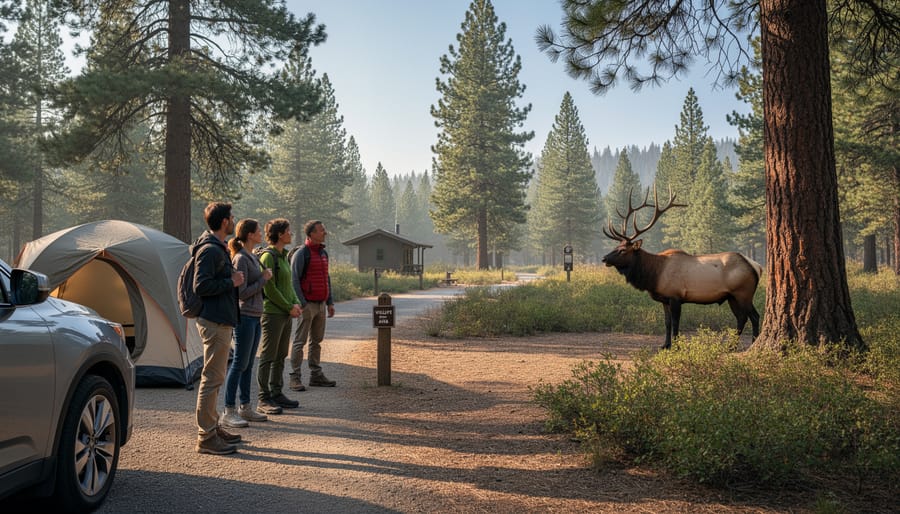
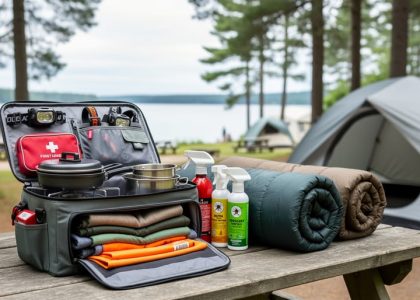
Manitoba’s boreal forest demands respect and preparation. Black bears, elk, and bison roam Riding Mountain year-round, so secure all food, toiletries, and scented items in your vehicle or the bear-proof lockers provided at each campground. Never leave coolers, dishes, or garbage unattended at your site. If you’re hiking between your campsite and Wasagaming townsite or the trails, carry bear spray and make noise on wooded paths, Parks Canada staff recommend talking, clapping, or wearing a bell to avoid surprise encounters.
Weather shifts fast in this region. Summer storms roll in with little warning, bringing heavy rain, lightning, and sudden temperature drops. Pack a four-season tent or sturdy rain fly, and bring layers for cool nights that can dip into the single digits even in July. Afternoons can be hot and humid, so plan activities for early morning or evening and know how to beat the heat when the sun peaks. A camper named Joanna told us her family’s first night at Moon Lake turned cold and wet within an hour of arrival; because they’d packed wool socks, tarps, and backup propane, they stayed warm and dry while less-prepared neighbours packed up early.
Insects peak from late May through August. Bring DEET or picaridin repellent, a bug net for your face, and consider permethrin-treated clothing for extended hikes. Ticks are present in tall grass, so check yourself and pets daily.
Water taps are available at most campgrounds, but always confirm sources with park staff and treat backcountry water with a filter or purification tablets. Pack all your camping safety gear before you leave home, Wasagaming townsite has limited supplies. Follow Leave No Trace principles: pack out every scrap of waste, use established fire rings only when allowed, and leave natural features undisturbed for the next visitor.
Common Questions About Riding Mountain Camping
Can I bring my dog to Riding Mountain campgrounds?
Yes, pets are welcome at Riding Mountain National Park campgrounds, but they must be leashed at all times and are not permitted on most trails or in the main beach area. Keep your dog under control and clean up after them to protect wildlife and other campers.
Are there RV hookups available?
Wasagaming Campground offers full-service sites with electrical hookups, making it the best choice for RVers seeking amenities. The remote campgrounds like Deep Lake, Moon Lake, and Whirlpool Lake do not have hookups and are better suited for tent camping or self-contained RVs.
What’s the cell signal like in the park?
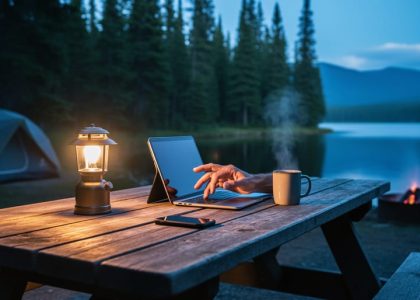
Cell reception is generally reliable in Wasagaming townsite and at Wasagaming Campground, but expect limited or no signal at the remote lakeside campgrounds. Plan accordingly if you need connectivity for work or emergencies.
Is firewood provided at the campsites?
Firewood is not provided at campsites, but you can purchase it from park vendors or bring your own from certified local sources. Never transport firewood from outside the region, as this can introduce invasive pests that harm Manitoba’s forests.
When are the campgrounds open for the season?
Opening and closing dates vary by campground and year, so check the Parks Canada website or call 1-877-737-3783 for current alerts and seasonal schedules before you finalize your reservation. Wasagaming typically has the longest season, while remote sites may open later in spring.
Most first-time visitors wonder about drinking water access. All developed campgrounds have potable water taps, though you may need to walk a short distance from your site. Bring a collapsible water container to make fetching water easier, especially if you’re camping with kids or cooking elaborate meals. At the remote sites, confirm water availability when you book, as maintenance schedules can affect tap service.
Shower facilities are available at Wasagaming Campground, a welcome luxury after a day of hiking or paddling. The other campgrounds do not have showers, so pack biodegradable soap and plan for lake baths or quick sponge-offs if you’re staying at Deep Lake, Moon Lake, or Whirlpool Lake. Many campers find the trade-off worthwhile for the solitude and wildlife sightings these quieter spots deliver.
Riding Mountain National Park stands out among camping destinations in Canada for good reason. You get a rare combination: the convenience of Wasagaming’s townsite amenities right alongside remote lakeside sites where you can wake to elk grazing at the forest edge. The six campgrounds cater to everyone from families wanting a full-service base camp to solitude-seekers paddling into backcountry quiet. In 2026, the free admission period from June 19 to September 7 and the 25% camping discount make this Manitoba treasure even more accessible.
The key is booking early through the Parks Canada reservation system. Summer spots fill quickly, especially during the discount window, so reserve as soon as your dates are clear. Once you’re there, respect the wilderness that makes this place special: store food properly, follow bear safety protocols, and leave no trace. Whether you pitch your tent steps from Wasagaming’s beach and restaurants or claim a secluded site at Deep Lake, you’ll find Riding Mountain delivers that balance of comfort and true Canadian forest immersion. Plan ahead, book smart, and enjoy.