Canada protects some of the planet’s most spectacular wilderness through 37 national parks and 11 national park reserves, spanning every province and territory from Pacific tide pools to Arctic tundra. Whether you’re planning your first camping trip to Banff or mapping out a cross-country adventure to remote corners like Auyuittuq in Nunavut, this complete guide gives you the full picture of what Parks Canada manages and how to access it all through a single Discovery Pass.
The beauty of Canada’s national park system isn’t just its size. It’s the astonishing variety. You can watch grizzly bears fish for salmon in British Columbia’s coastal rainforests, paddle through Ontario’s ancient waterways dotted with 2,000-year-old pictographs, or pitch your tent under the midnight sun in the Yukon. Parks Canada shoulders the responsibility of protecting these irreplaceable landscapes while keeping them accessible to visitors like you who want to experience them firsthand.
Trip planning becomes infinitely easier when you understand the full scope of what’s available. Some parks welcome millions of visitors annually and require reservations months in advance. Others see just a few hundred adventurers each year and offer true backcountry solitude. This guide breaks down the complete list, highlights the standout camping destinations that keep Canadians coming back year after year, and delivers the practical booking and access information you need to turn your park research into an actual reservation.
Understanding Canada’s National Parks System
Canada’s national parks form the cornerstone of the country’s wilderness conservation efforts, protecting vast ecosystems that span from coastal rainforests to arctic tundra. Parks Canada oversees a network of 37 national parks and 11 reserves spread across every province and territory, making these protected landscapes accessible to Canadians and visitors from coast to coast to coast.
National parks receive full protection under the Canada National Parks Act, meaning their ecosystems are legally preserved for current and future generations. National park reserves hold similar protected status but exist in areas where Indigenous land claims are still being negotiated. Once those claims are settled, reserves typically transition to full national park designation. Both park types offer the same visitor experiences and camping opportunities while Parks Canada works with Indigenous communities to honour treaty rights and traditional land use.
Parks Canada’s mandate extends beyond simply drawing boundaries around wilderness. The agency actively manages these areas to balance conservation with visitor access, maintaining trails, campgrounds, and interpretive programs while protecting wildlife habitats and fragile ecosystems. Rangers monitor animal populations, restore damaged landscapes, and ensure campers follow Leave No Trace principles that keep parks pristine.
| Province/Territory | Number of Parks/Reserves | Notable Features |
|---|---|---|
| British Columbia & Yukon | 10 parks/reserves | Pacific coastline, mountain ranges, Arctic wilderness |
| Alberta & Saskatchewan | 7 parks | Rocky Mountains, prairie grasslands, boreal forests |
| Ontario & Quebec | 6 parks/reserves | Great Lakes, Canadian Shield, St. Lawrence waterways |
| Atlantic Provinces | 8 parks/reserves | Coastal cliffs, tidal systems, Acadian forests |
| Territories (NWT, Nunavut) | 7 parks/reserves | Arctic tundra, barren lands, indigenous heritage sites |
These protected areas matter because they preserve Canada’s natural heritage in its wildest form. They safeguard migration corridors for caribou, nesting grounds for endangered species, and intact watersheds that support surrounding communities. For visitors, they offer authentic wilderness experiences where you can canoe routes paddled for centuries, camp under genuinely dark skies, and witness ecosystems functioning as they have for millennia, not as sanitized attractions but as living, breathing landscapes.
Why Visit Canada’s National Parks
Canada’s national parks protect some of the planet’s most extraordinary landscapes, and visiting them offers experiences you simply can’t replicate elsewhere. These 37 parks and 11 reserves span every province and territory, meaning you can explore coastal rainforests dripping with moss in British Columbia, witness polar bears along Hudson Bay in Manitoba, or stand beneath the northern lights in the Yukon, all within the same protected system.
What sets national parks apart from provincial parks or private campgrounds is their dual mission: preserving wilderness in its natural state while making it accessible to visitors. Parks Canada manages these areas with conservation as the priority, which means you’re camping in landscapes that remain largely unchanged from centuries ago. The wildlife viewing opportunities reflect this protection, grizzly bears, caribou, and wolves roam freely, and you’re entering their home, not a curated exhibit.
The camping infrastructure strikes a balance between comfort and wilderness immersion. You’ll find everything from frontcountry campgrounds with hot showers to backcountry sites where the only sounds are wind through spruce trees and loon calls echoing across lakes. Sarah, a Toronto camper who’d never slept in a tent before visiting Bruce Peninsula, told us: “Waking up to sunrise over Georgian Bay, hearing the waves against the cliffs, it completely changed how I understood what Canada actually is.”
Beyond scenery, these parks hold deep cultural significance. Many incorporate Indigenous heritage sites and traditional territories, offering chances to learn stories that stretch back thousands of years. The hiking trails, over 1,000 kilometres of maintained paths in Banff alone, take you past glaciers, through ancient forests, and along coastlines shaped by the highest tides on Earth.
Top National Parks for Camping and Outdoor Adventures
1. Banff National Park, Alberta
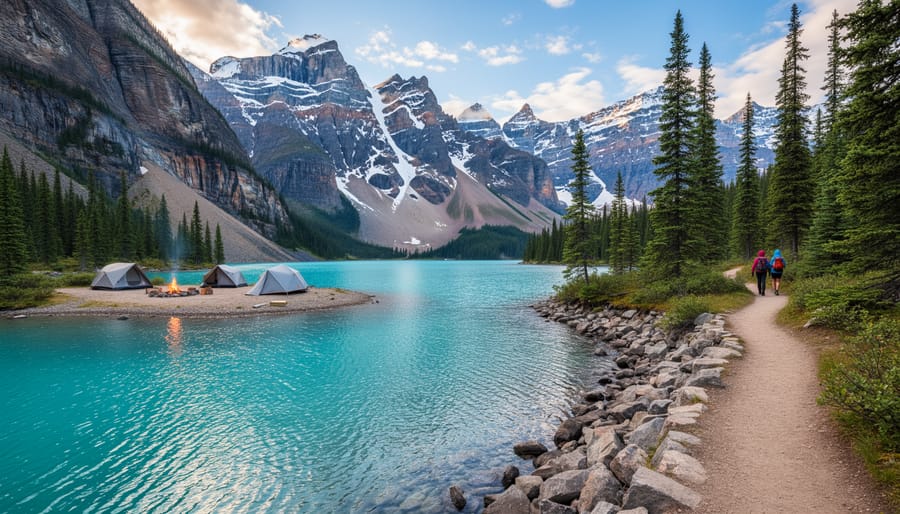
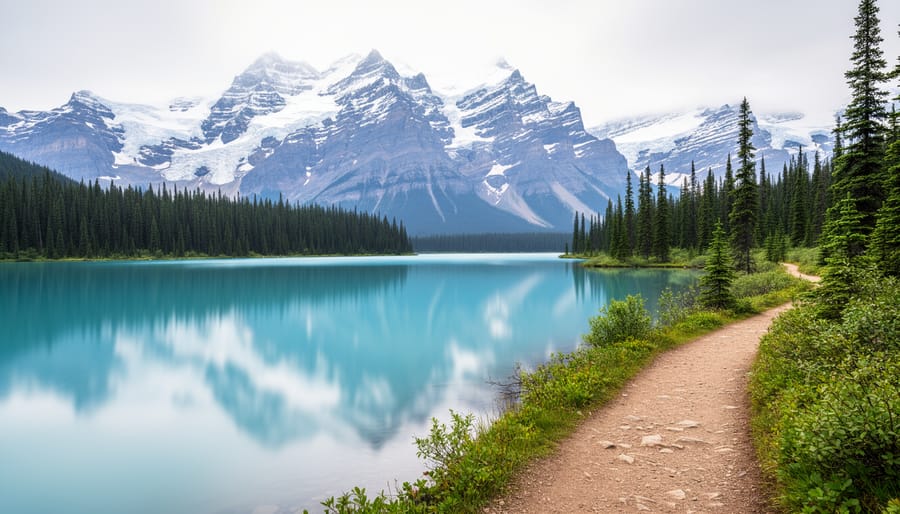
Established in 1885, Banff became Canada’s first national park and remains the crown jewel of the country’s protected wilderness areas. Nestled in the heart of the Alberta Rockies, this 6,641-square-kilometre wonderland draws millions of visitors annually with its impossibly turquoise lakes, glacier-carved valleys, and mountain peaks that scrape the sky.
Despite the crowds, Banff delivers transformative camping experiences. The park operates 13 campgrounds ranging from full-service sites with showers and electrical hookups to more rustic backcountry options. Tunnel Mountain Village, the largest facility, suits families seeking amenities close to Banff townsite, while Two Jack Lakeside offers stunning mountain-backed lake views and easier wildlife sightings. For a quieter experience, Johnston Canyon Campground puts you steps from one of the park’s most photographed waterfalls, though you’ll need to arrive early or book months ahead.
What makes Banff unmissable is the sheer concentration of iconic experiences within reach of your tent. Lake Louise and Moraine Lake gleam like polished gems in their alpine settings. The Icefields Parkway unfolds as one of Earth’s most scenic drives. Grizzly bears, elk, and bighorn sheep roam freely, often visible from campgrounds at dawn.
Yes, July and August bring shoulder-to-shoulder hikers on popular trails. But venture beyond Lake Louise before 7 a.m., explore the less-traveled Sunshine Meadows, or camp in September when the larches turn gold, and you’ll understand why this park has captured imaginations for nearly 140 years.
2. Jasper National Park, Alberta
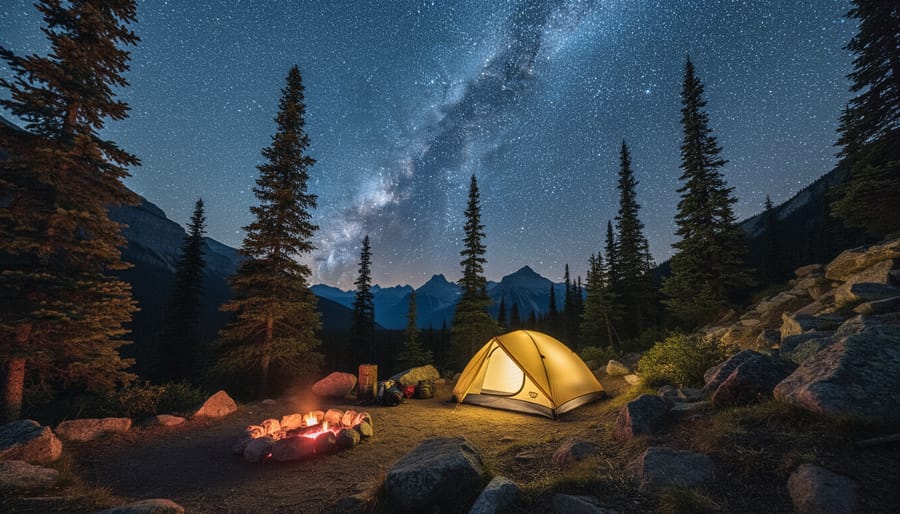
Jasper National Park sprawls across 11,000 square kilometres of the Canadian Rockies, making it the largest national park in the mountain range and a completely different experience from its famous southern neighbour. While Banff attracts crowds to its postcard-perfect townsite, Jasper offers something increasingly rare: genuine solitude in the wilderness.
The camping here reflects that remote character. Whistlers Campground, the park’s largest facility, sits surrounded by mountains with fewer amenities than Banff’s developed sites, which suits campers perfectly fine. Wapiti and Wabasso campgrounds provide even quieter options along the Athabasca River, where elk wander through sites at dawn and you might spot black bears foraging in meadows beyond the treeline.
What truly sets Jasper apart is its designation as a Dark Sky Preserve, the largest accessible dark sky preserve in the world. On clear nights, the Milky Way stretches overhead in stunning detail, and during autumn you might catch the northern lights dancing above your tent. This darker environment also means wildlife behaves more naturally. Grizzly bears, wolves, and caribou thrive here in numbers that feel authentic rather than performative.
The trails venture deeper into backcountry with less traffic than Banff’s highway-accessible routes. Tonquin Valley, Brazeau Loop, and Skyline Trail deliver multi-day backpacking adventures through alpine meadows where you’ll encounter more marmots than people. Even roadside stops like Maligne Lake and Athabasca Falls feel less congested, letting you actually hear the water instead of tourist chatter.
For campers who value wilderness immersion over convenience, Jasper delivers exactly what Canada’s national parks were meant to protect.
3. Pacific Rim National Park Reserve, British Columbia
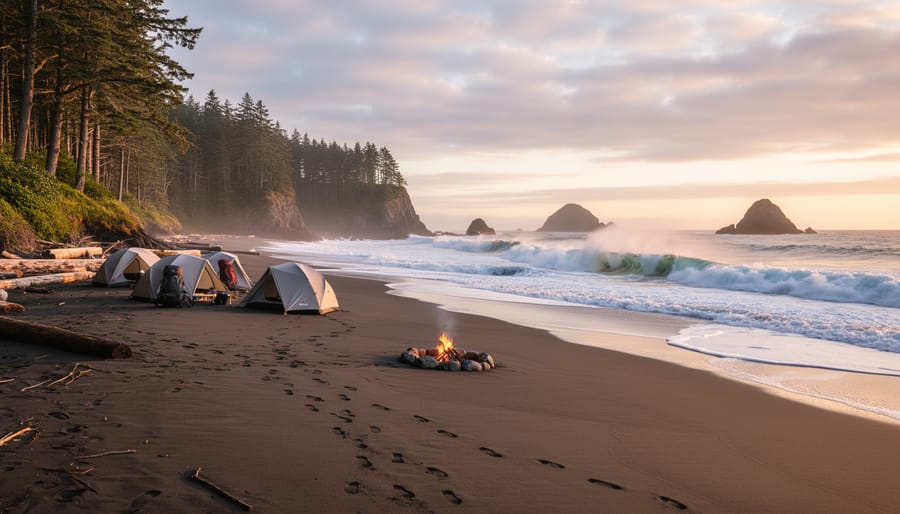
Pacific Rim National Park Reserve sits on Vancouver Island’s wild west coast, where temperate rainforest meets crashing Pacific waves. Unlike the mountain parks of the Rockies, camping here means waking to the sound of surf and exploring misty old-growth forests draped in moss.
The park’s three distinct areas offer different experiences. Long Beach draws surfers and beachcombers with 16 kilometres of sandy shoreline backed by dense rainforest. Green Point Campground sits right on the beach, prime territory for sunset watching and storm season drama. The Broken Group Islands archipelago caters to sea kayakers seeking backcountry paddling among protected channels and rocky islets. Meanwhile, the West Coast Trail challenges experienced backpackers with multi-day coastal trekking through rugged terrain.
West Coast camping comes with unique considerations. Rain is a given, especially outside summer months. Quality waterproof gear isn’t optional. Tides dictate your plans, some beaches and trails become impassable at high water. Wildlife encounters differ too: black bears roam the forests, but you’re more likely to spot seals, sea lions, and migrating grey whales offshore.
Sarah, a Victoria-based camper, describes her May visit: “We pitched our tent 50 metres from the beach during a break in the rain. That night, a storm rolled in with winds that had our rainfly snapping like a sail. By morning, the sun broke through and we walked the beach completely alone except for bald eagles picking through tidal pools.”
The reward for embracing West Coast unpredictability is experiencing Canada’s only coastal temperate rainforest ecosystem, ancient cedars, maritime weather systems, and shoreline solitude that feels worlds apart from inland camping.
4. Gros Morne National Park, Newfoundland and Labrador
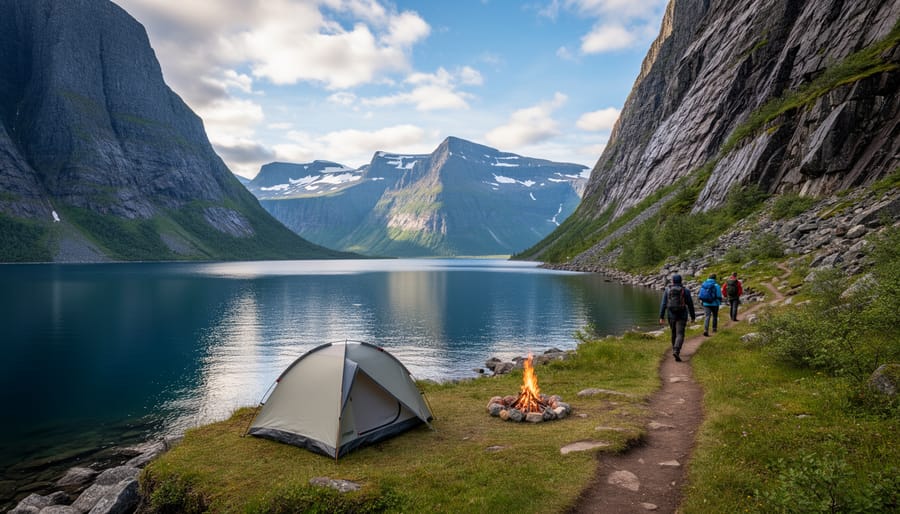
Gros Morne stands apart as Newfoundland and Labrador’s showcase of raw geological drama, a UNESCO World Heritage Site where you can walk across ancient ocean floor and camp beneath cliffs that predate most life on Earth. The park’s tableland plateaus, carved fjords cutting ten kilometers inland, and coastal lowlands create three distinct camping worlds within one destination.
Berry Hill and Trout River campgrounds put you closest to the park’s signature landscapes. Berry Hill sits near the base of Gros Morne Mountain, while Trout River positions campers at the foot of the Tablelands, that rust-colored moonscape of exposed mantle rock that geologists travel continents to witness. Both offer full services and pull-through sites for RVs, though the real draw is stepping out of your tent into scenery that rewrites your understanding of geological time.
Western Brook Pond demands the extra effort: a three-kilometer walk followed by a boat tour through what locals insist are Canada’s most dramatic fjord walls. Landlocked since the glaciers retreated, this “pond” drops 165 meters deep between 600-meter cliffs, a perspective no photograph captures adequately.
The journey to Gros Morne involves commitment. You’re looking at flights to Deer Lake or a two-ferry route from the mainland, then highway driving through communities where accents thicken and hospitality runs deep. That remoteness filters out casual visitors, leaving campsites quieter than their western counterparts even in July. Pack layers, coastal Newfoundland weather shifts hourly, and that maritime wind cuts through fleece like it’s cheesecloth.
5. Bruce Peninsula National Park, Ontario
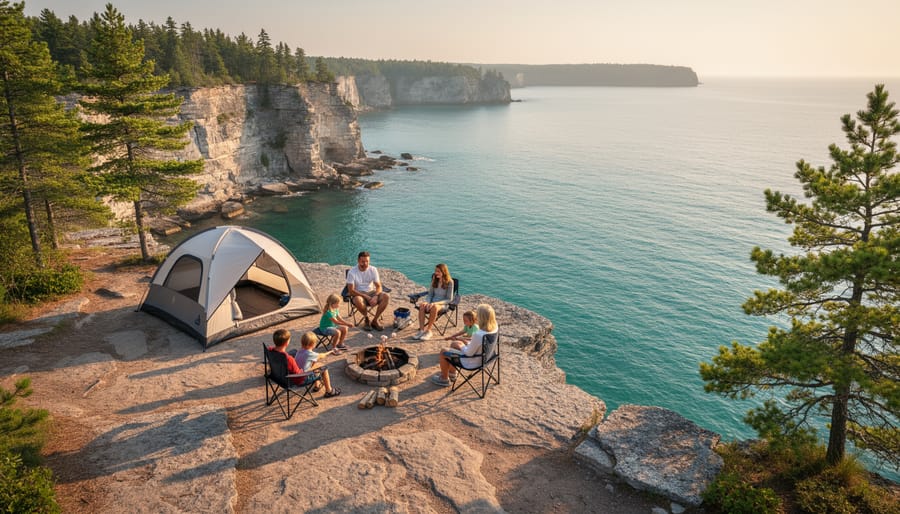
Bruce Peninsula National Park sits at the northern tip of Ontario’s Niagara Escarpment, offering some of the most accessible wilderness camping in eastern Canada. Just four hours from Toronto, this park draws families and first-time national park visitors with its remarkably clear turquoise waters and dramatic limestone cliffs.
The park’s crown jewel is the Grotto, a wave-carved cave where swimmers can explore crystal-clear waters framed by ancient rock formations. The Cyprus Lake Campground serves as base camp for exploring both the Grotto and the white-pebble beaches that rival Caribbean destinations for water clarity, though the Georgian Bay waters remain refreshingly cold even in summer.
Unlike remote wilderness parks requiring extensive planning, Bruce Peninsula welcomes beginners with well-maintained trails, drive-in campsites with modern facilities, and ranger programs perfect for introducing children to camping. The shoreline camping experience here differs completely from mountain or prairie parks, with swimming, kayaking, and cliff jumping replacing alpine hikes as signature activities.
Our Bruce Peninsula camping guide covers reservation strategies for this popular park, where summer weekends book out within hours of the reservation window opening. Spring and fall offer fewer crowds while still providing comfortable camping temperatures and excellent hiking conditions along the escarpment trails.
6. Prince Albert National Park, Saskatchewan
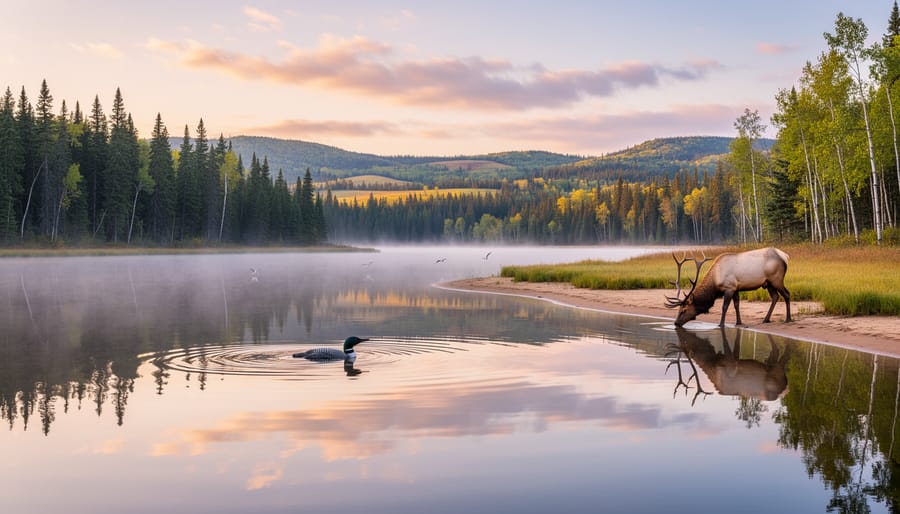
Prince Albert National Park sits where the prairie meets the boreal forest, creating a unique ecological crossroads that most campers never expect to find in Saskatchewan. This transition zone supports an incredible diversity of wildlife, including one of Canada’s few free-roaming plains bison herds, descendants of animals reintroduced to their historic range.
The park’s network of interconnected lakes makes it a paddler’s paradise. Kingsmere Lake offers multi-day backcountry canoe routes with established camping spots along wooded shorelines, where you’ll fall asleep to loon calls echoing across the water. For families, Waskesiu Lake provides frontcountry campgrounds with beach access, interpretive programs, and trails through stands of trembling aspen and white spruce.
Wildlife watching here rivals any mountain park. Beyond the bison, you might spot black bears, wolves, elk, and rare white pelicans nesting on Lavallee Lake. The mixing of prairie and forest ecosystems creates habitat edges where animal sightings peak, especially at dawn and dusk along park roads.
What makes Prince Albert special is its accessibility combined with genuine wilderness character. Located just three hours north of Saskatoon, it offers serious backcountry experiences without the crowds that pack western mountain parks. Many campers discover this park by accident and leave as converts, surprised that Saskatchewan holds such diverse landscapes and authentic wilderness encounters within a single protected area.
7. Fundy National Park, New Brunswick
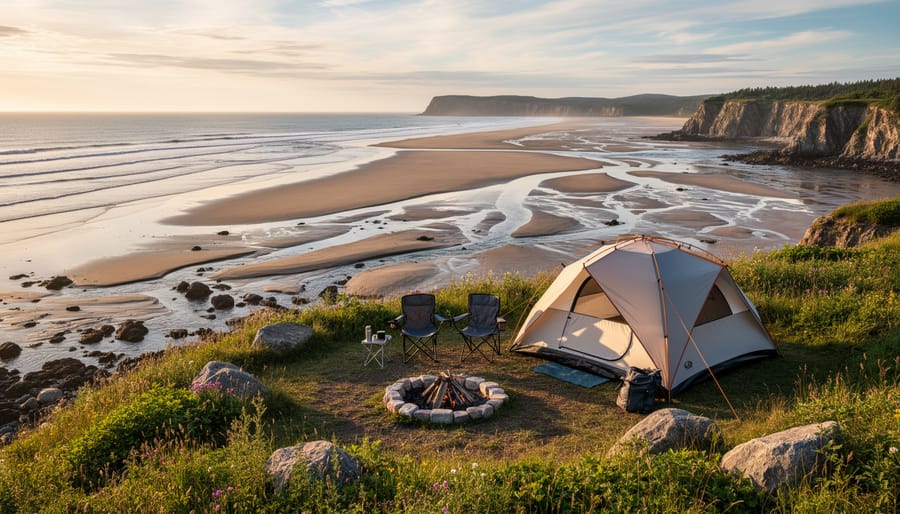
Fundy National Park sits on the Bay of Fundy’s dramatic coastline, where the world’s highest tides rise and fall up to 16 meters (52 feet) twice daily. This constant rhythm creates a camping experience unlike anything you’ll find in Canada’s mountain or prairie parks. You’ll pitch your tent in dense Acadian forest, then walk minutes to coastal trails where the shoreline completely transforms every six hours.
The park’s four frontcountry campgrounds, Headquarters, Chignecto North, Point Wolfe, and Wolfe Lake, nestle among red spruce and balsam fir, offering sheltered sites that contrast sharply with the windswept coast below. Headquarters Campground provides the most services and electric sites, while Point Wolfe delivers a more intimate experience near a covered bridge and tidal river mouth. Many campers time their coastal hikes around low tide to explore sea caves, tidal pools teeming with periwinkles and sea stars, and vast mudflats that vanish beneath churning water hours later.
The 50-kilometer trail network ranges from easy coastal walks to challenging interior routes through old-growth forest and past waterfalls. Dickson Falls Trail, a wheelchair-accessible boardwalk loop, showcases the park’s lush forest floor where ferns carpet the ground beneath towering hemlocks. For a true tidal experience, the Coastal Trail connects multiple beaches and offers front-row seats to the bay’s powerful transformations, just check tide tables before heading out, as rising water can cut off beach access quickly.
8. Ivvavik National Park, Yukon
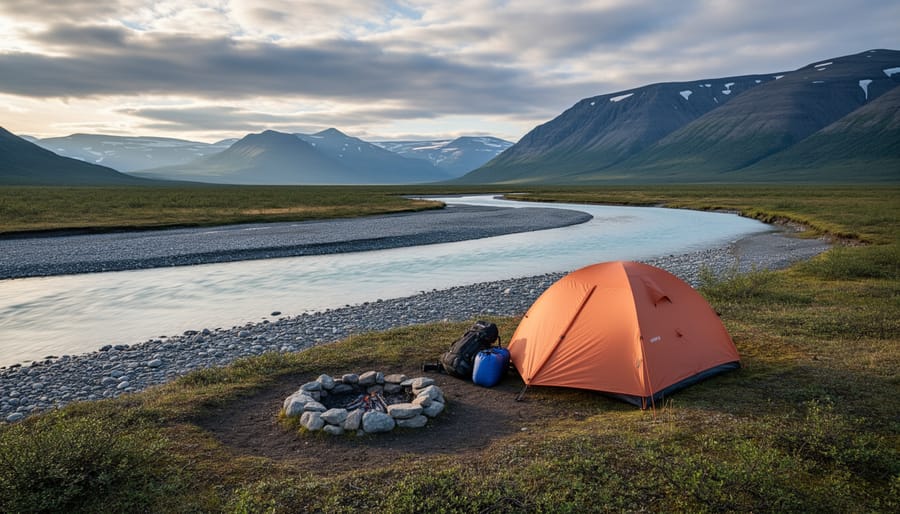
Ivvavik National Park sits above the Arctic Circle in Yukon’s northernmost reaches, where the British Mountains meet the Beaufort Sea. This is Canada’s national parks system at its most uncompromising: no roads penetrate the park’s boundaries, no services await visitors, and the only way in is a chartered Twin Otter flight from Inuvik. The park protects critical calving grounds for the Porcupine caribou herd, 170,000 animals migrating across one of the continent’s last intact wilderness corridors.
Experienced backcountry campers who make the journey encounter a landscape few Canadians will ever see. The Firth River offers multi-day rafting expeditions through deep canyons, past grizzly bears fishing for Arctic char and muskoxen grazing tundra slopes. Midnight sun bathes the treeless valleys in constant golden light throughout summer, while autumn transforms the ground cover into brilliant crimson within days.
This isn’t camping with nearby ranger stations or emergency services. Weather shifts violently, river crossings can trap parties for days, and wildlife encounters require constant vigilance. One veteran paddler who rafted the Firth described it as “the most humbling week of my life, utterly alone in a place that operates on its own terms, where you’re just passing through on nature’s permission.”
Trips typically require coordinating with licensed outfitters who manage logistics, bear-proof containers, and satellite communications. Parks Canada mandates pre-trip orientation covering Leave No Trace principles critical to preserving this fragile Arctic ecosystem. The isolation is absolute, the commitment total, and for those seeking genuine wilderness immersion beyond comfort zones, Ivvavik represents the ultimate Canadian national park experience.
Practical Planning Information
Discovery Pass and Entry Fees
The Discovery Pass unlimited access represents the best value for anyone planning multiple national park visits in a year, covering admission to more than 80 Parks Canada places for 12 full months from the purchase date. A family or group pass costs $145.25 (covering up to seven people in one vehicle), while an adult pass runs $75.25. If you visit just three national parks in a year, the pass pays for itself compared to daily entry fees that typically range from $8 to $11 per adult.
Day passes work for single visits or quick trips, priced per person or per vehicle depending on the park. Families planning a week-long camping trip to one park might find daily passes more economical than the annual option. Seniors aged 65 and over enjoy free admission year-round with a free annual senior pass.
Parks Canada also offers national parks free dates throughout the year, including special occasions when entry fees are waived for everyone. If you camp regularly or plan road trips hitting multiple parks across provinces, the Discovery Pass becomes essential gear alongside your tent and sleeping bag.
Booking Campsites and Accommodations
Parks Canada operates a centralized online reservation system where campers can book sites up to 90 days in advance of their arrival date. Bookings typically open at 8 AM Eastern Time, and popular parks like Banff and Jasper fill within minutes of that window opening, especially for summer weekends and holiday periods. For detailed guidance on navigating the system, including specific timing strategies and fee structures, see our comprehensive guide on Parks Canada Alberta booking.
When traditional campsites are unavailable, Parks Canada offers several alternatives. oTENTik accommodations provide a hybrid camping experience with tent-like structures on raised floors, equipped with beds, chairs, and woodstoves, perfect for families or those new to camping who want comfort without sacrificing the outdoor experience. Many parks also maintain first-come, first-served sites, though arriving early is essential during peak season. Backcountry camping presents another option for experienced campers willing to hike into remote sites, often requiring separate permits but offering solitude and pristine wilderness access when frontcountry campgrounds reach capacity.
Local Tips for National Park Camping
After camping across Canada’s national parks for over a decade, Sarah Chen learned that timing is everything. “May and early June are magical,” she says. “Campgrounds have space, wildflowers are blooming, and you avoid the July-August rush entirely.” Shoulder seasons offer another advantage: fewer bugs. Black flies and mosquitoes peak in late spring, so late August through September delivers comfortable temperatures without the swarms.
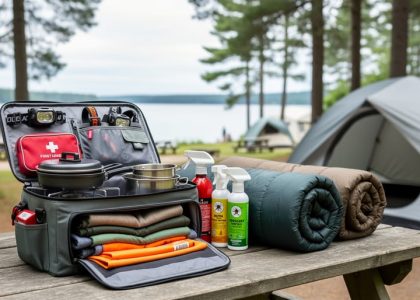
Weather preparation varies dramatically by region. Coastal parks like Pacific Rim require waterproof everything, even in summer, while prairie parks swing from scorching days to near-freezing nights. Mountain parks demand layers regardless of season. Pack your camping safety gear with regional conditions in mind, including bear spray for western parks and Yukon territories, and tick-removal tools for eastern woodland areas.
Wildlife safety protocols differ between parks. In Banff and Jasper, hard-sided food storage lockers are mandatory at every campsite. Eastern parks like Fundy focus more on raccoon-proof containers. Always check specific park regulations before arrival, as violations can result in hefty fines and, more importantly, condition animals to associate humans with food.
Experienced campers know to arrive at campgrounds before 2 PM, even with reservations. Popular sites like those in Bruce Peninsula fill early, and claiming your spot promptly gives you time to set up before dark and scout nearby trails. Tom Rodriguez, who camps yearly at Gros Morne, suggests checking park websites for “locals’ secrets”, lesser-known trails, swimming holes, or viewpoints that don’t appear in main brochures.
Respect quiet hours religiously. National parks enforce these strictly, typically 11 PM to 7 AM, and fellow campers appreciate the consideration. Generator use is prohibited or restricted at most campgrounds, making solar chargers and battery packs essential for extended stays.
Frequently Asked Questions
How many national parks are there in Canada?
Canada has 37 national parks and 11 national park reserves managed by Parks Canada, located across every province and territory. This complete system protects diverse ecosystems from coastal rainforests to Arctic tundra.
Do I need reservations to camp in national parks?
Most popular national park campgrounds require advance reservations, especially during summer months and long weekends. Some parks offer first-come, first-served sites, but booking ahead through the Parks Canada reservation system is recommended to guarantee a spot.
Is the Discovery Pass worth buying?
The Discovery Pass provides unlimited admission for 12 months to more than 80 Parks Canada places, making it worthwhile if you plan to visit multiple parks or make several trips to the same park within a year. A family visiting just two or three national parks typically recovers the cost compared to daily entry fees.
Can I bring my dog to national parks?
Dogs are allowed in many national parks but must remain on leash and are typically restricted from trails, beaches, and backcountry areas to protect wildlife. Check specific regulations for your destination park, as policies vary and some areas prohibit pets entirely.
When choosing your first national park to visit, consider proximity to your location, the type of camping experience you want, and seasonal access. Parks like Bruce Peninsula or Fundy offer accessible entry points for beginners close to major cities, while Banff and Jasper provide iconic mountain experiences despite larger crowds. Reading campground reviews and considering your comfort level with amenities versus wilderness camping will help narrow down the best fit for your first adventure in Canada’s protected wilderness.
Canada’s national parks system represents one of the world’s most impressive collections of protected wilderness, and it’s all waiting for you to explore. With 37 national parks and 11 national park reserves spread across every province and territory, there’s genuinely a perfect park for every camping style, fitness level, and timeline. Whether you’re drawn to the iconic mountain vistas of the Rockies, the rugged coastlines of the Maritimes, the ancient geology of Newfoundland, or the remote Arctic tundra of the Far North, your ideal Canadian wilderness experience exists within this remarkable network.
The Discovery Pass remains your best value for exploring multiple Parks Canada places throughout the year, offering unlimited admission to more than 80 locations for 12 months. Start planning your national park adventure today using the practical tips and featured destinations we’ve covered. Every park on the Canadian National Parks List offers something unique, and your next unforgettable camping story is out there waiting to be written beneath Canadian stars.