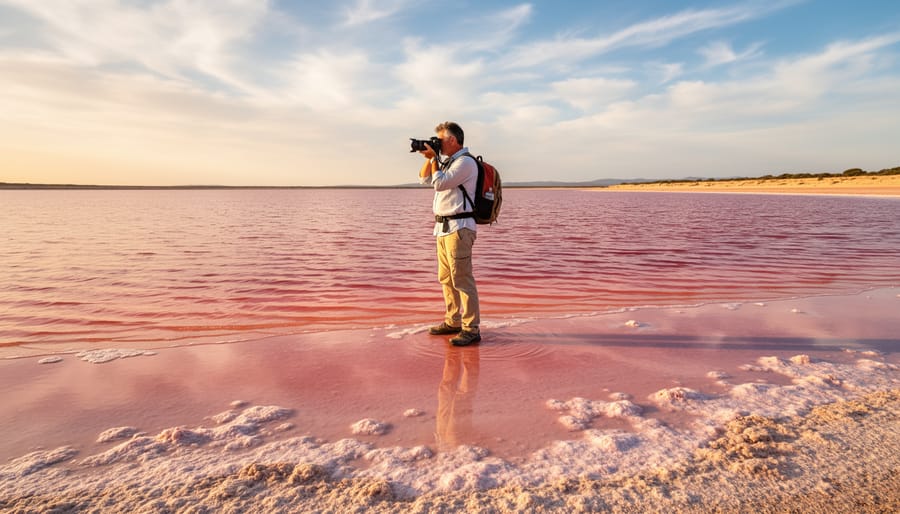
Western Australia’s pink lakes are sprawling natural wonders where water turns vivid bubblegum hues thanks to salt-loving algae called Dunaliella salina, and the best spots to see them are Hutt Lagoon near Port Gregory on the Coral Coast (about five hours north of Perth) and the lakes around Esperance on the southern coast. These aren’t subtle pastel tints. On the right day, you’re looking at water the color of strawberry milk stretching to the horizon, a sight so surreal it feels Photoshopped even when you’re standing right there.
The pink phenomenon happens when high salinity levels trigger the algae to produce beta-carotene, the same pigment that makes carrots orange. Sunlight, salt concentration, and temperature all affect the intensity, so the color can shift from soft rose to electric magenta depending on the season and time of day. Hutt Lagoon offers the most reliable color year-round and sits right beside the highway, making it accessible for any vehicle and open 24/7 with free entry.
For Canadian campers used to navigating backcountry terrain and packing for weather extremes, Western Australia’s outback presents different challenges. You’re trading black bears and sudden cold snaps for intense heat, remote distances where services disappear for hundreds of kilometers, and sun exposure that demands constant hydration. But the reward is a landscape unlike anything back home: ancient salt systems, coastlines where red desert meets turquoise ocean, and those impossible pink lakes that have turned into one of Australia’s most sought-after natural spectacles.
This isn’t a quick roadside stop. Getting the most from WA’s pink lakes means understanding the science, planning your route through genuinely remote country, and timing your visit for the best color.
What Makes Western Australia’s Pink Lake Actually Pink
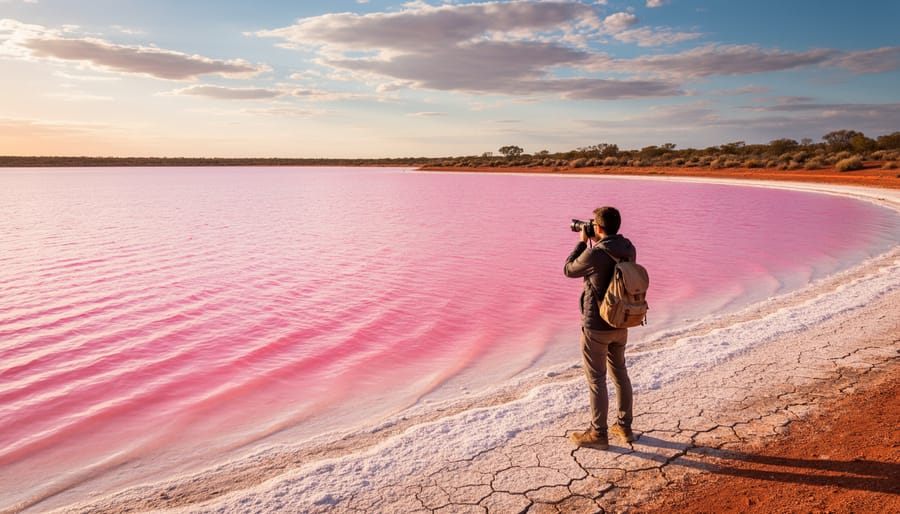
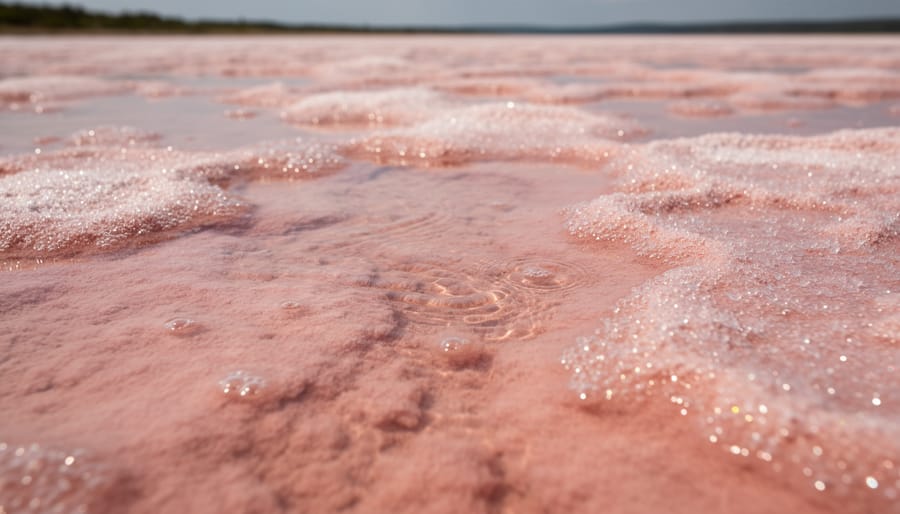
The vibrant pink hue that stops visitors in their tracks isn’t paint or pollution, it’s nature’s chemistry at work. Western Australia’s pink lakes owe their striking color to a microscopic algae called Dunaliella salina, which thrives in waters with extremely high salt concentrations. When conditions are just right, this hardy organism produces beta-carotene and salt compounds as a defense mechanism against intense sunlight and salty conditions, turning the water anywhere from pale rose to deep magenta.
Think of it like this: the algae is essentially making its own sunscreen. Beta-carotene, the same pigment that makes carrots orange, protects the organism from UV radiation. As billions of these tiny algae cells multiply and produce more beta-carotene, the water gradually shifts from clear to pink. The process is similar to how flamingos get their pink color from eating beta-carotene-rich algae and shrimp.
Salt concentration is the key factor determining whether a lake turns pink. These water bodies need to be roughly ten times saltier than the ocean, around 35% salinity compared to seawater’s 3.5%. At these extreme levels, most organisms can’t survive, but Dunaliella salina flourishes without competition. The saltier the water, the more stressed the algae becomes, and the more beta-carotene it produces for protection.
Not all pink lakes maintain their color year-round, which frustrates some visitors who arrive expecting bubble-gum pink and find muddy brown instead. The intensity depends on several shifting variables: water temperature, sunlight exposure, salt levels, and recent rainfall. Summer months typically produce the most dramatic pink displays because high temperatures and strong sun stress the algae, ramping up beta-carotene production. After heavy rains, diluted salt levels can cause the color to fade temporarily as the algae population adjusts.
Water depth also matters. Shallow lakes concentrate the algae near the surface where sunlight is strongest, creating more vivid colors than deeper bodies where algae disperses through the water column. This explains why some lakes appear uniformly pink while others show streaks and patches of varying intensity, you’re essentially seeing different algae concentrations responding to localized conditions.
Where to Find WA’s Most Stunning Pink Lakes
Pink Lake at Port Gregory
The Pink Lake at Port Gregory sits just off George Grey Drive, roughly a four-hour drive north of Perth. Unlike some of WA’s other pink lakes that require scenic flights or four-wheel-drive access, this one welcomes visitors right from the roadside. You’ll find it clearly marked at WA 6450, open year-round with no gates, no fees, and no time restrictions.
What makes Port Gregory’s Pink Lake particularly appealing for travelers is its accessibility. Park your vehicle at the designated viewing area and walk right up to the shoreline. The lake’s pink hue varies with the season and salt levels, sometimes appearing bubblegum bright and other times more of a dusty rose. Early morning and late afternoon light tend to bring out the most vivid colors.
The tiny fishing village of Port Gregory itself offers basic amenities, a caravan park, public toilets, and a small general store. Most visitors pair their lake stop with a visit to the nearby Hutt River mouth, where the river meets the ocean in a striking contrast of blues and pinks. Bring your own food and water, as dining options are limited. The exposed location means wind can be fierce, so a light jacket helps even on warm days. Cell reception is patchy, so download maps beforehand.
Hutt Lagoon on the Coral Coast
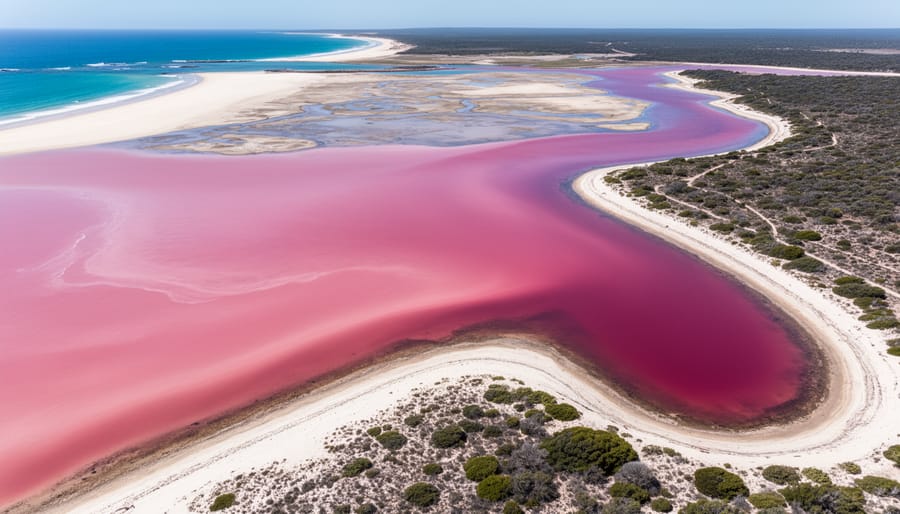
Hutt Lagoon stretches across 14 kilometers of Western Australia’s Coral Coast, making it the largest pink lake you can visit in the state. Located about five hours north of Perth near the town of Gregory, this salt lake delivers the intense bubble-gum pink that social media has made famous, but seeing it in person hits differently than any photo can capture.
What sets Hutt Lagoon apart is its sheer scale and the intensity of its color. The shallow water creates a massive canvas of pink that shifts from soft rose to deep fuchsia depending on the time of day and cloud cover. Drive along George Grey Drive, which runs right beside the lagoon, and you’ll find multiple spots to pull over and take in the view. Early morning and late afternoon offer the most dramatic light, when the sun sits low and the pink really pops against the sky.
The lagoon owes its commercial salt production operation to the same algae that creates the pink hue, so you might spot industrial equipment in some areas. But the vastness of the lake means you can easily find pristine stretches that feel untouched. Bring your camera, but also give yourself time to just stand there and absorb the strangeness of it, a horizon-to-horizon pink lake is something your brain needs a minute to process.
Pink and Rainbow Lakes Near Esperance
The Esperance region, along Western Australia’s southern coast, offers something special for pink lake enthusiasts: multiple coloured salt lakes clustered within reach of each other. This area is home to both Pink Lake and Rainbow Lake, though reaching them by road requires navigating rough tracks that aren’t suitable for all vehicles.
Here’s where the view gets truly spectacular. Fly Esperance runs scenic flights over these lakes, giving you an aerial perspective that reveals why the region is so remarkable. From above, you’ll see the contrast between the pink lakes and the deep blue of the Southern Ocean just beyond, with the shifting salt patterns creating natural artwork across the landscape. The flight path typically covers both Pink Lake and Rainbow Lake, letting you appreciate their different hues and the surrounding coastline in ways you simply can’t from ground level.
Esperance itself sits about eight hours southeast of Perth, making it a longer drive than the Coral Coast options. But if you’re already planning to explore the southern coast, or if aerial photography is your thing, the scenic flight turns the distance into an advantage. You’re not just visiting a pink lake; you’re accessing a cluster of coloured lakes in a remote setting where the ocean meets the outback.
Book flights directly through Fly Esperance, and check weather conditions beforehand since flights depend on clear visibility.
Planning Your Pink Lake Adventure from Canada
Getting from Canada to Western Australia’s pink lakes takes some planning, but the payoff is worth every detail you nail down. The flight alone clocks in around 20 hours with connections through US or Asian hubs, so build in a day or two in Perth to shake off the jet lag before you tackle the drives. Western Australia is massive, and those outback distances aren’t like the stretches between provincial parks back home.
Timing matters. April through October delivers the best color at most pink lakes because cooler months mean higher salt concentrations and more vibrant algae blooms. Summer in WA runs December through February, and while that coincides with Canadian winter escape plans, it’s brutally hot in the outback and the pink hues can fade. Spring, especially September and October, gives you solid color and comfortable temperatures for exploring on foot.
Structure your trip as a loop if you’re chasing multiple lakes. Fly into Perth, head north to Hutt Lagoon and Port Gregory over two or three days, then either backtrack or continue the coastal route depending on your timeline. Esperance sits southeast of Perth, so factor that as either a separate trip or an ambitious extension if you’ve got ten days or more. If you’re used to building camping itinerary ideas for multi-stop Canadian road trips, apply that same approach here but double your estimated drive times.
Rent a vehicle in Perth with unlimited kilometers. Compact cars work for sealed roads to Hutt Lagoon, but a 4WD opens up rougher tracks near some lesser-known pink lakes. Book accommodations early in coastal towns like Geraldton or Esperance because options thin out fast outside peak season.
Pack differently than you would for a Canadian camping trip. Sun protection trumps everything: high-SPF sunscreen, a wide-brim hat, polarized sunglasses, and long sleeves in breathable fabric. The UV index in WA will fry you faster than anything you’ve experienced at home. Bring layers for cool mornings, but don’t overpack heavy gear. You’ll want a quality camera or phone with solid battery life, and if you plan for power needs, pack international adapters and portable chargers because outback stops don’t always offer convenient outlets. Do pack rainwear for unexpected showers, though rain is rare in the dry months.
Download offline maps before you leave cell range and carry extra water in the car. Small-town grocery stores stock basics, but don’t count on trail mix or specialty snacks you’d find at Canadian outdoor retailers.
Tour Options and Experiences Worth Considering
The most practical way to see WA’s pink lakes depends on your comfort level with outback driving and how much ground you want to cover. A guided tour removes the navigation stress and provides expert commentary, while a self-drive adventure gives you freedom to linger as long as you want at each location.
The Perth 2-Day Tour: Pinnacles, Pink Lake & Stargazing ($498) is a solid choice if you want multiple experiences packed into one trip. This option combines Hutt Lagoon with the otherworldly Pinnacles Desert and evening stargazing, making it efficient for travelers on a tight timeline. The tour handles all logistics, from transportation to timing your pink lake visit for optimal light. You’ll travel with a small group and benefit from a guide who knows the best vantage points and can explain the science behind the colors.
For aerial perspectives, scenic flights through operators like Fly Esperance offer a completely different view of the pink lakes near Esperance. From above, you’ll see how the pink and turquoise waters create natural art against the coastline. These flights typically last 30 to 60 minutes and let you photograph patterns you’d never catch from ground level. The trade-off is cost and weather dependence, but the perspective is genuinely breathtaking.
Pros
- Guided tours eliminate navigation concerns and optimize timing for best lake conditions.
- Expert guides provide context about the science and history you might miss on your own.
- Tours bundle multiple attractions efficiently, maximizing limited vacation time.
- Self-drive allows you to adjust your schedule and spend extra time at locations that captivate you.
- Independent travel lets you visit at sunrise or sunset without group constraints.
Cons
- Guided tours run on fixed schedules that may not align with your preferred pace.
- Tours involve sharing the experience with strangers and adhering to group dynamics.
- Self-drive requires confidence navigating remote areas with limited services.
- Independent travel means you’ll need to research optimal visit times and conditions yourself.
- Solo travelers might find guided tours more economical when factoring in vehicle rental and fuel.
The self-drive route works well for confident road-trippers familiar with remote travel. Pink Lake at Port Gregory is particularly accessible with year-round, 24/7 free entry and straightforward highway access. You can stop whenever you want, return for different lighting conditions, and combine multiple pink lakes in one trip without adhering to a tour itinerary. The main requirement is a reliable vehicle, proper navigation tools, and comfort with long stretches between towns.
Canadian campers used to planning multi-day wilderness trips will likely appreciate the flexibility of self-driving, while those seeking a more curated introduction might prefer letting a tour company handle the details. Either way, you’ll witness something genuinely extraordinary.
Photography Tips for Capturing the Perfect Pink
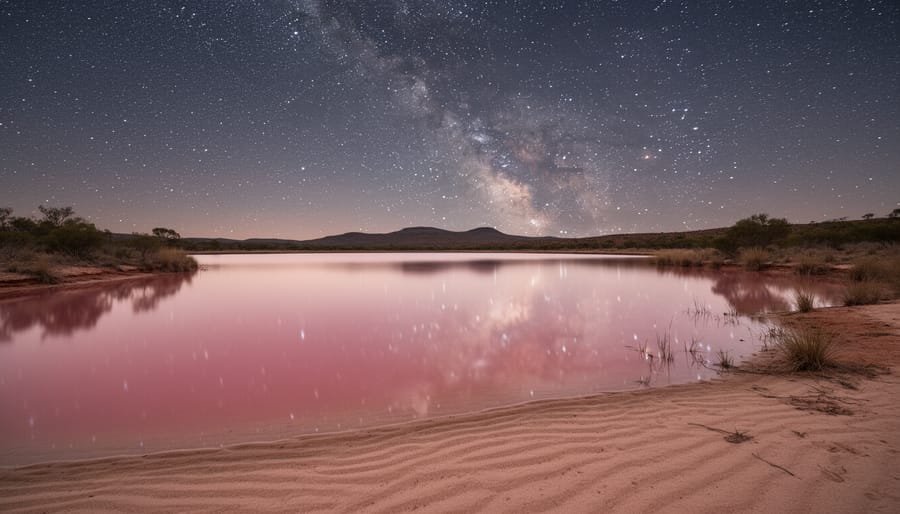
The key to photographing pink lakes is working with their unique color profile rather than fighting against it. Your camera sees these landscapes differently than your eyes do, so understanding a few fundamentals will save you from disappointing results.
Timing Your Shots
Early morning and late afternoon deliver the most dramatic results. The low-angle sunlight intensifies the pink tones while adding depth through shadows and highlights. Midday overhead sun flattens the color and creates harsh contrasts that wash out the distinctive pink hue. If you’re visiting Port Gregory, the year-round access means you can scout your location the evening before and return at sunrise for optimal conditions.
Camera Settings That Work
For beginners with smartphones or basic cameras, turn off auto white balance and select the “daylight” or “sunny” preset. Auto modes often try to neutralize the pink, giving you muddy browns instead. Disable any automatic color correction features.
For those with manual controls, start with ISO 100 to minimize noise, an aperture around f/8 to keep both foreground and background sharp, and adjust your shutter speed accordingly. Shoot in RAW format if available, you’ll have far more flexibility to fine-tune the pink saturation during editing without destroying image quality.
Composition Beyond the Obvious
Include contrasting elements to give scale and context. A weathered fence post, footprints in salt crusts, or distant figures add human interest. The shoreline where pink water meets white salt creates a natural leading line. At Hutt Lagoon, aerial perspective from scenic flights reveals geometric patterns invisible from ground level.
Common Mistakes to Avoid
Don’t over-saturate during editing, exaggerated pink looks artificial and screams “heavily processed.” Avoid photographing when wind creates ripples that break up the color’s smooth intensity. Skip polarizing filters; they can introduce unwanted color shifts with water this reflective. And never assume one location’s lighting will match another’s. Each pink lake has different salinity and algae concentrations affecting how it photographs.
Pack lens wipes, salt spray coats everything quickly in these environments.
What Canadian Campers Should Know About WA Outback Safety
You’ve navigated Canadian backcountry where distances stretch and cell service vanishes, so you’ll recognize some parallels in Western Australia’s outback. The challenges here, though, come with a distinctly Australian twist: extreme heat, vast expanses between services, and terrain that demands respect in different ways than our northern forests.
The most critical difference is the heat. Summer temperatures (December through February) regularly exceed 40°C (104°F), and even spring and autumn can hit 35°C. Unlike camping trips where you might beat the heat with a swim or shade, the outback offers little relief. Carry at least five litres of water per person per day, double what you’d pack for a Canadian summer hike. Many visitors underestimate how quickly dehydration sets in when you’re walking on salt flats or standing in open desert landscape for photography.
Your standard safety gear applies, but add sun-specific protection: broad-spectrum SPF 50+, a wide-brimmed hat, and lightweight long sleeves trump the shorts-and-tank approach. The sun intensity differs from what you’re used to back home. Check your vehicle thoroughly before heading to locations like Pink Lake at Port Gregory, ensuring your spare tire is inflated, you have extra fuel, and your cooling system works properly. Distances between towns can span hundreds of kilometres with nothing in between.
Wildlife presents different risks than bears or moose. Snakes are active in warmer months and favour shaded spots where you might rest. Wear closed-toe shoes around lake edges and watch where you step. If you’re camping nearby rather than day-tripping, secure food properly as dingoes are curious and persistent.
Download offline maps before you leave connected areas. The open landscape makes navigation seem straightforward until landmarks blur together under harsh light. Morning visits between 6-10am offer cooler conditions and better light for both safety and photography, letting you experience these remarkable lakes while avoiding the day’s peak heat.
Beyond the Pink: Other Natural Wonders Nearby
Western Australia’s pink lakes sit within a landscape packed with natural attractions that’ll remind you why this corner of the world draws adventurers from across the globe. Plan a few extra days, and you’ll discover experiences that rival the pink lakes themselves.
If you’re visiting Hutt Lagoon on the Coral Coast, the Pinnacles Desert in Nambung National Park lies about two hours south. These limestone formations rising from yellow sand create an otherworldly scene that feels like landing on another planet. Walk among thousands of these ancient pillars at sunset, when the light transforms them from stark white to glowing amber.
The Kalbarri National Park stretches along the coast near Port Gregory’s Pink Lake, offering dramatic river gorges and coastal cliffs that plunge into turquoise water. The Nature’s Window rock formation frames views that Canadian Rockies enthusiasts will appreciate, though the red rock and desert vegetation create a completely different flavour. Spring wildflower displays here rival anything you’ve seen back home.
Down near Esperance, where the pink lakes shine brightest from above, Lucky Bay in Cape Le Grand National Park hosts the whitest sand beaches in Australia. Kangaroos lounge on these beaches like they own the place, completely unbothered by visitors snapping photos. The coastal granite formations and crystal-clear water make for spectacular swimming when you need a break from lake-hopping.
The wildflower season from July through October adds another layer to any pink lake trip. Western Australia’s native blooms carpet entire regions in purple, yellow, and red. Time your visit right, and you’ll experience two of nature’s colour shows in one journey.
Standing at the edge of a vast pink lake in Western Australia’s outback, you’ll understand why some natural wonders deserve the long journey to reach them. The sight of water stretching to the horizon in shades of rose and bubblegum challenges everything you thought you knew about lakes and landscapes.
Whether you’re drawn to the year-round accessibility of Pink Lake in Port Gregory, the photogenic expanse of Hutt Lagoon on the Coral Coast, or the aerial spectacle of Esperance’s pink and rainbow waters, each visit offers something genuinely different from the wilderness experiences back home. As Canadian adventurers, we know the thrill of discovering nature’s unexpected masterpieces, from aurora-lit skies to turquoise glacial lakes. WA’s pink lakes belong on that same list of earth’s most striking displays.
The science behind the colour might be straightforward (algae, salt, and light working together), but the emotional impact is anything but ordinary. These are the kinds of places that remind us why we seek out wild spaces in the first place: not just to see something beautiful, but to feel that rush of wonder when nature shows off in ways we never imagined possible.
Add this one to your bucket list. Your sense of what’s possible in the natural world will thank you.