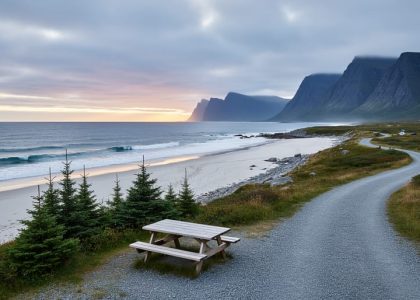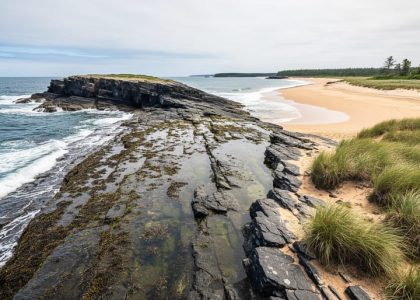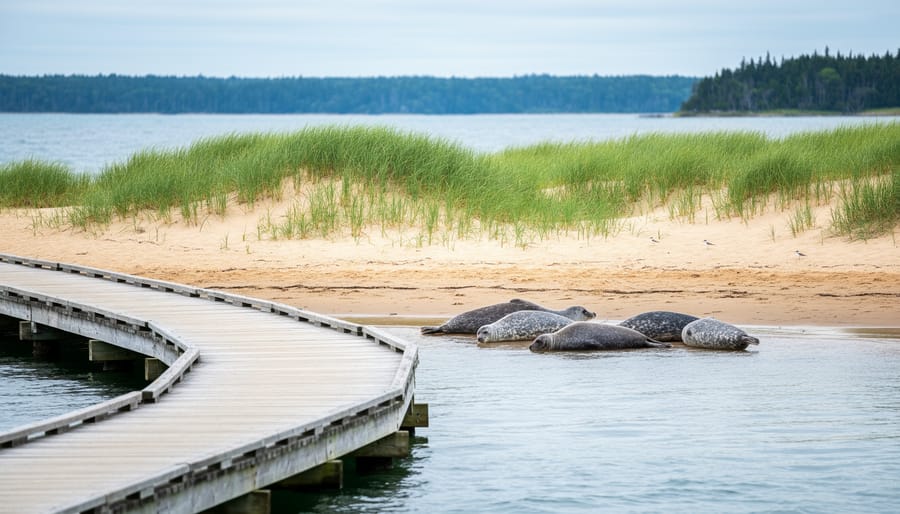
Kouchibouguac National Park stretches along 25 kilometres of New Brunswick’s eastern coastline, offering an uncommonly diverse all-season playground where barrier islands, salt marshes, and Acadian forest meet the Northumberland Strait. The park delivers what most visitors are planning for: accessible camping (from oTENTik glamping to fully-serviced RV sites), warm-water beaches that rival any in Atlantic Canada, and wildlife encounters ranging from harbour seals hauled out on sandbars to piping plovers nesting in protected dunes. Unlike the rugged, inland terrain of many New Brunswick national parks Kouchibouguac rewards visitors who crave gentle trails perfect for families, kayak routes through mirror-calm lagoons, and fat-tire biking on snowy trails when winter transforms the coast into a quiet expanse of white.
Reservations for campsites and accommodations open each January through Parks Canada’s booking system, and checking the park’s current bulletins before your visit is essential, as closures and wildlife activity can shift access to certain areas. Daily entry fees apply year-round, with additional charges for camping and interpretive programs. What sets this park apart is its genuine four-season appeal: summer brings beach days and paddling, fall offers solitude and migratory bird spectacles, winter turns trails into cross-country ski corridors, and spring awakens nesting season when sections close to protect fragile species. Real campers return year after year, drawn by the rhythms of tides, the scent of salt air, and the rare feeling of standing at the edge of two worlds.
What Makes Kouchibouguac Special
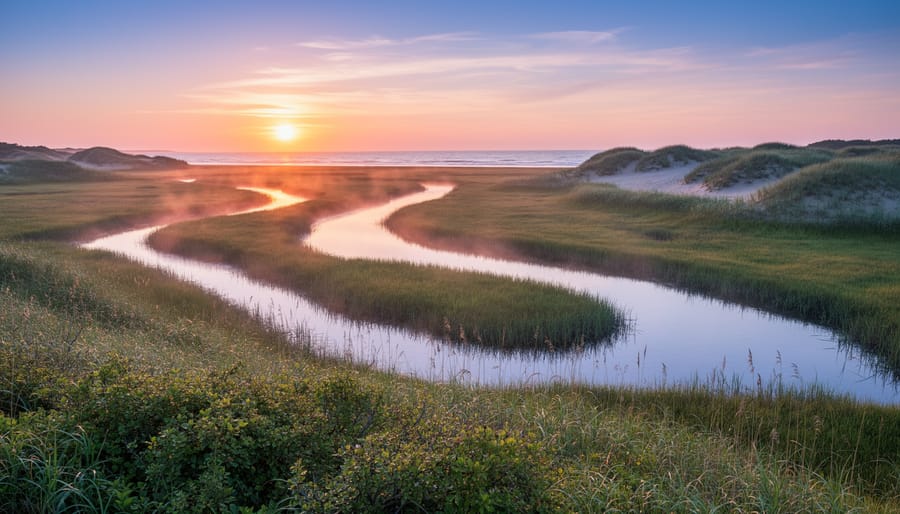
Kouchibouguac protects 238 square kilometres of New Brunswick’s coastal wilderness where boreal forest meets the Northumberland Strait. The park’s landscape shifts between warm-water lagoons, extensive salt marshes, rolling sand dunes, and sphagnum bogs, creating habitat diversity that supports an exceptional range of species. This isn’t the dramatic mountain scenery you’ll find out west, it’s a quieter, more subtle beauty where ecosystems layer together along the coast.
The meaning of Kouchibouguac comes from the Mi’kmaq word for “river of the long tides,” reflecting centuries of Indigenous presence on this land. The Mi’kmaq people have harvested these waters and forests for generations, and their cultural connection to the area remains central to the park’s identity. Understanding this history adds depth to any visit, you’re walking trails and paddling waterways that have supported human life for thousands of years.
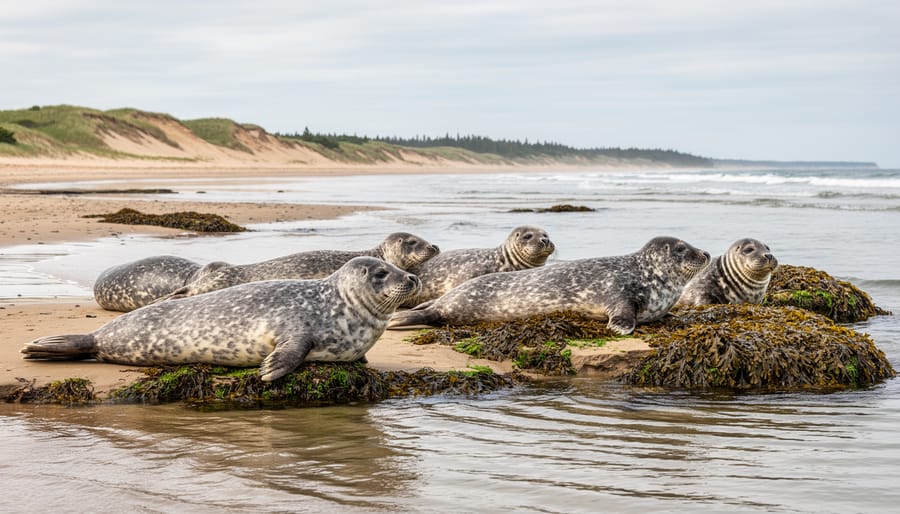
Wildlife watching here spans both land and water. Grey seals haul out on offshore sandbars, particularly visible during pupping season. Black bears roam the forested sections, especially active in berry season. The park’s bird list tops 200 species, from nesting piping plovers on the beaches to migrating shorebirds that stop to refuel in the marshes. White-tailed deer browse the forest edges at dawn and dusk, while harbour seals appear in the coastal waters year-round.
The barrier islands protect the mainland from storm surges while creating sheltered lagoons perfect for paddling. These dynamic landforms shift with each major storm, constantly reshaping the coastline. Behind the dunes, the salt marshes act as nurseries for marine species and feeding grounds for wading birds, a productive ecosystem that looks deceptively still from shore.
Planning Your Visit: Fees, Reservations, and Season Details
Getting into Kouchibouguac requires some advance preparation, particularly if you’re planning a camping trip. The park charges a daily visitor fee for anyone entering the grounds, with camping fees and program costs billed separately. While these fees aren’t trivial, they support the conservation of this coastal wilderness and the facilities that make it accessible to visitors.
The Parks Canada booking system handles reservations for both campsites and accommodations like oTENTiks. For the 2026 visitor season, reservations opened in January, though the exact launch date varied by location and accommodation type. If you’re reading this in late summer or fall and haven’t booked yet, don’t assume everything’s taken. Cancellations happen regularly, and checking back frequently can turn up openings even during peak season.
Kouchibouguac operates year-round, which means your visit timing depends entirely on what you want to experience. Summer brings warm beach days and accessible trails, while winter transforms the park into a completely different landscape with cross-country skiing and fat biking opportunities. Each season demands different preparation, from sun protection and bug spray in July to proper cold-weather gear in February.
Before you finalize any trip, check park bulletins for current warnings, closures, and restrictions. Maritime weather can shift quickly, coastal conditions change with storms, and wildlife activity sometimes necessitates temporary trail closures. A boardwalk that was perfectly safe last week might be closed today for repairs after a storm surge. Bird nesting seasons can restrict access to certain beach areas. Winter visits require checking if facilities like washrooms remain open in the colder months.
The reservation system lets you secure your spot months ahead, but conditions on the ground can change between booking and arrival. Checking updates a day or two before you leave gives you time to adjust your plans if a section of the park you were counting on turns out to be temporarily inaccessible.
Camping at Kouchibouguac
Frontcountry Camping
South Kouchibouguac Campground serves as the park’s main frontcountry camping area, offering 311 sites spread across loops that accommodate everything from tent campers to large RVs. The campground operates from late May through early October, with sites bookable through Parks Canada’s reservation system starting each January.
Families and first-time campers gravitate here for good reason. Most loops provide drive-up access to level, gravelled pads with picnic tables and fire rings. If you’re planning to bring appliances or want the convenience of charging devices without draining your vehicle battery, camping with electricity is available at 123 sites with 15-amp service.
The campground includes comfort stations with flush toilets, hot showers, and dishwashing sinks, amenities that ease the learning curve for camping beginners. A central amphitheatre hosts interpretive programs throughout summer, and paved bike paths connect directly to the park’s trail network. Kelly’s Beach sits just three kilometres away by trail or road.
Côte-à-Fabien Campground, smaller and quieter with 32 sites, offers a similar frontcountry setup on the park’s northern edge. It lacks electrical hookups but provides the same modern washroom facilities and a more secluded feel among the pines.
Backcountry and Primitive Options
Kouchibouguac’s backcountry camping scene is quieter than you’d expect for a coastal park, which makes it perfect if you’re ready to step beyond drive-up sites. The park offers primitive camping options that put you deeper into the landscape without requiring hardcore bushwhacking skills.
Backcountry campsites sit along trails and waterways, accessible by foot, bicycle, or paddling your own canoe or kayak into the park’s sheltered bays. These spots have minimal infrastructure, think fire pits and cleared tent pads rather than flush toilets and picnic tables. You’ll need to pack in your water or bring filtration gear, and practice proper backcountry waste disposal.
The solitude here isn’t absolute isolation (you’re still in a managed park with regular patrols), but you’ll trade convenience for quiet mornings watching fog lift off the marshes and evenings without generator hum. Winter backcountry camping opens up when snow covers the trails, offering an entirely different experience for those comfortable with cold-weather camping techniques.
Reserve backcountry sites through the Parks Canada system just as you would frontcountry spots. Check current trail conditions and any seasonal closures before heading out, especially during shoulder seasons when weather can shift quickly along the coast.
Alternative Accommodations
If you love the idea of camping but aren’t quite ready to sleep in a tent, Kouchibouguac’s oTENTik accommodations split the difference beautifully. These A-frame canvas-and-wood structures come with beds, furniture, a small porch, and electricity, so you get the sounds and smells of the forest without wrestling with tent poles in the rain. They’re heated, making them practical even during shoulder seasons when nights turn cold. Beyond oTENTiks, the park offers other roofed options that provide shelter while keeping you connected to the outdoors. These alternatives work especially well for families with young children, first-time campers testing the waters, or anyone who wants a backcountry feel with a real door to close at night. Book early through the Parks Canada reservation system since these spots fill quickly during peak summer weeks and holiday weekends.
Summer Adventures: Beaches, Trails, and Water Activities
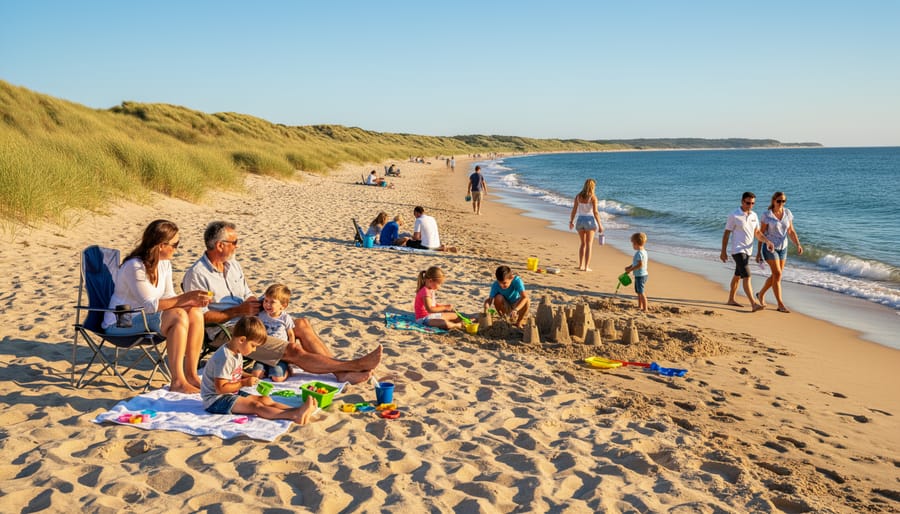
Kelly’s Beach stands as the park’s undisputed summer centrepiece. The supervised swimming area draws families to its warm, shallow waters and soft sand, while the beach’s stunning dune backdrop creates a coastal setting that feels more Caribbean than Maritime. Lifeguards patrol during peak season, but always check current conditions and heed posted warnings about rip currents and shifting sandbars before entering the water.
The park’s 60 kilometres of cycling trails rank among the best in Atlantic Canada. The paved Callanders Beach Trail offers an easy 8-kilometre ride through forest and along the coastline, perfect for families and casual cyclists. More adventurous riders tackle the unpaved Osprey and Ryan’s Loop trails, where roots and sandy patches demand mountain bike tires and attention. Rent bikes at the visitor centre if you’re travelling light.
Paddlers find their paradise in Kouchibouguac’s sheltered lagoons and tidal rivers. The Kouchibouguac River provides calm water for beginners learning canoe strokes, while experienced kayakers explore the intricate salt marsh channels where herons stalk through the cordgrass. Launch from designated access points and time your paddle with the tides; low water can leave you portaging through mud rather than gliding over channels. Rental canoes and kayaks are available, though booking ahead ensures you get the craft you want.
Hikers should start with the Bog Trail boardwalk, a 2-kilometre loop that reveals the park’s unique peatland ecosystem without getting your boots wet. The Major Kollock Creek Trail extends 10 kilometres through mixed Acadian forest, offering a moderate workout with minimal elevation change. Wear moisture-wicking layers even in summer; coastal fog can roll in quickly, dropping temperatures and soaking cotton shirts.
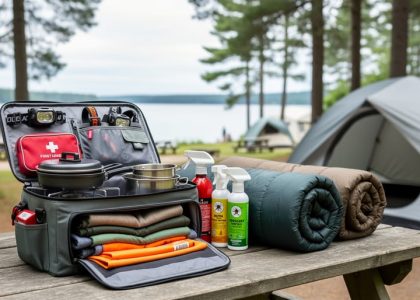
Pack these essentials: reef-safe sunscreen (the beach water is surprisingly clear), bug spray for forest trails, a dry bag for electronics near water, and a windbreaker regardless of the morning forecast. The ocean moderates temperatures but amplifies wind. Those planning to camp year-round at Kouchibouguac can apply lessons from snow camping tips during winter visits, though summer demands different preparation focused on sun and water safety.
Winter at Kouchibouguac: A Snowbound Playground
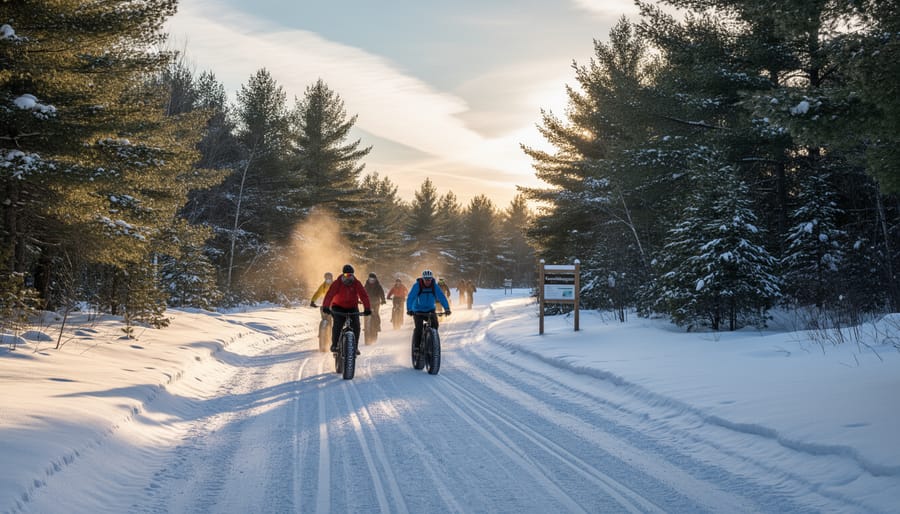
When the first snow blankets Kouchibouguac’s coastal landscape, the park transforms into a quiet, crystalline wilderness that attracts a different breed of adventurer. Winter here isn’t just accessible, it’s genuinely special, offering experiences you won’t find in warmer months.
The park maintains over 60 kilometers of groomed trails specifically for winter use. Cross-country skiers glide through snow-laden forests where the silence is broken only by the rhythmic swish of skis and the occasional chickadee call. The coastal trail system takes on new character under snow, with ice formations along the shoreline creating otherworldly sculptures where waves meet frozen sand. Fat bikers tackle the same routes on wider tires, leaving tracks that crisscross ski trails in the early morning quiet.
Snowshoeing opens up areas that summer hikers can’t easily reach. The bogs and marshes that define Kouchibouguac’s landscape become accessible when frozen, letting you walk atop ecosystems you’d otherwise view from boardwalks. You’ll spot animal tracks everywhere, deer, snowshoe hare, even the occasional fox, written clearly in fresh powder.
Winter camping at Kouchibouguac appeals to experienced cold-weather campers seeking solitude. The frontcountry campgrounds that buzz with families in July stand nearly empty in February, offering a peaceful base camp for multi-day winter excursions. You’ll need proper four-season gear and cold-weather experience, but the reward is waking to frost-covered dunes and having entire trail networks to yourself.
The Maritime climate means Kouchibouguac’s winters aren’t as brutally cold as interior New Brunswick locations, though coastal winds demand respect. Pack wind-resistant layers and always check current conditions through park bulletins before heading out. Weather can shift quickly along the shore, and what starts as a calm morning can turn blustery by afternoon. Plan for shorter daylight hours and carry extra supplies, winter here demands preparation, but it delivers unforgettable coastal wilderness experiences.
Wildlife Watching Through the Seasons
Kouchibouguac’s coastal ecosystems create a wildlife-watching stage that shifts with the seasons. Grey seals haul out on barrier islands year-round, but your best views come between May and September when colonies gather on exposed sandbars near Ryan’s Island and offshore rocks. Bring binoculars and scan from shore rather than approaching by kayak, seals are sensitive to disturbance during pupping season in late spring.
Spring brings the park’s most celebrated visitor: the endangered piping plover. These small, sand-coloured shorebirds nest on Kelly’s Beach and other dune systems from late April through August. Parks Canada closes sections of beach during nesting to protect these ground-nesters, so respect barriers and watch from designated viewing areas. Alongside plovers, you’ll spot great blue herons stalking salt marshes and migrating warblers passing through coastal forests.
Black bears roam the park’s interior forests, most active at dawn and dusk during summer and fall as they prepare for winter. White-tailed deer appear throughout the year but are easiest to spot during winter when they concentrate in sheltered areas and their tracks mark fresh snow. Look for them near forest edges at daybreak.
Winter transforms the park into a tracking classroom. Snowshoe hares, red foxes, and river otters leave clear prints across frozen bogs and along waterways. The quiet reveals pileated woodpeckers hammering dead trees and chickadees flitting through spruce stands.
Watch from your vehicle or designated pullouts when possible, never feed wildlife, and store all food in sealed containers at campsites. The park’s boardwalks and observation platforms at places like Bog Trail offer safe vantage points without trampling sensitive habitat. Check current park bulletins before your visit for any wildlife warnings or area restrictions.
Real Camper Stories from Kouchibouguac
The Martinez family arrived at South Kouchibouguac in mid-July for their first camping trip, nervous but excited. “We picked the spot closest to the washrooms,” admits Sarah Martinez, “which turned out to be smart with two kids under eight.” Their three days centered on Kelly’s Beach, where the shallow, warm waters gave her children confidence. What surprised them most was the evening: after the day visitors left, they had the boardwalk nearly to themselves. “We saw a family of deer walk right across the dunes at sunset. My son still talks about it.” Her one regret? Not bringing the best rainwear they owned. A sudden Maritime downpour on day two sent them scrambling, and their cheap ponchos didn’t hold up. “Next time, we’re investing in proper gear.”
Marc Leblanc chose February for his solo winter visit specifically because he wanted solitude. He snowshoed the Kouchibouguac River Trail on a crystalline morning when the temperature hit minus fifteen. “The coastal forest in winter is a different place entirely. No bugs, no crowds, just you and the frozen marsh.” He stayed in one of the few winter-accessible sites, learning quickly that a four-season tent and a quality sleeping bag rated well below zero aren’t luxuries in New Brunswick winters. The silence struck him most. “You hear your own breath, the crunch of snow, nothing else. It’s meditative.” He recommends checking park bulletins before any winter trip, as trail conditions and access points change with weather.
Cyclist Emma Chen tackled the Callanders Beach Trail system in September, covering thirty kilometers over two days. The flat, well-maintained paths made for easy riding, but she hadn’t anticipated how exposed the coastal sections would be. “The wind off the ocean is constant. I was grateful for my windbreaker.” She camped at Côte-à-Fabien, using the campground as a base for daily rides. Her tip for other cyclists: start early. “The morning light on the salt marshes is incredible, and you beat the afternoon heat.” She plans to return with a fat bike in January to try the winter trails.
Common Questions About Visiting Kouchibouguac
When’s the best time to visit Kouchibouguac?
Summer (June through August) brings warm beach weather and peak wildlife activity, while fall offers quieter trails and brilliant foliage. Winter transforms the park into a cross-country skiing and snowshoeing paradise for those seeking solitude and snowy coastal landscapes.
What should I pack for different seasons?
Summer visitors need beach gear, sunscreen, bug spray, and layered clothing for cool Maritime evenings. Winter campers should bring four-season gear, thermal layers, and equipment rated for temperatures well below freezing, as coastal winds amplify the cold.
Is there cell service in the park?
Cell coverage is limited and unreliable throughout most of Kouchibouguac. Plan to disconnect and download any maps or information before arrival.
Can I bring my dog?
Pets are permitted in most areas but must stay leashed at all times. They’re not allowed on Kelly’s Beach or in park buildings, so plan accordingly if travelling with animals.
The nearest town for major supplies is Richibucto, about fifteen minutes south of the park entrance, where you’ll find grocery stores, gas stations, and basic outdoor gear. For a wider selection or forgotten camping essentials, Miramichi sits roughly an hour northwest.
Maritime weather shifts without warning. Pack rain gear year-round and check park bulletins for current warnings, closures, and restrictions before you head out each day. Coastal fog can roll in during summer mornings, and winter storms occasionally close roads or trails temporarily.
The park offers accessible campsites, paved trails, and beach access mats at Kelly’s Beach for visitors with mobility considerations. Contact the park directly before booking to confirm which facilities match your specific needs, as accessibility features vary between campgrounds and trail sections.
Kouchibouguac stands out among Canada’s national parks precisely because it doesn’t demand expertise to enjoy. The barrier islands and salt marshes are as rewarding for a family pitching their first tent at South Kouchibouguac as they are for backcountry veterans paddling into remote coves. You’ll find modern campgrounds with electrical hookups next to wilderness sites accessible only by kayak, and the same trail system that welcomes summer cyclists transforms into a fat-biking and cross-country skiing network when snow arrives.
The park truly delivers year-round. Winter camping here offers an entirely different coastal experience, with frozen marshes and quiet beaches that few visitors see. Summer brings warm Gulf waters and endless sunshine on Kelly’s Beach. Every season reveals different wildlife, from spring’s migratory birds to winter’s seal colonies on the ice.
Start your planning through the Parks Canada reservation system, where you can book everything from frontcountry campsites to oTENTik structures. Before you leave home, check the park bulletins for current warnings, closures, and any restrictions that might affect your visit. Whether you’re looking for your first camping adventure or your next coastal wilderness challenge, Kouchibouguac’s 238 square kilometres of protected shoreline are waiting.