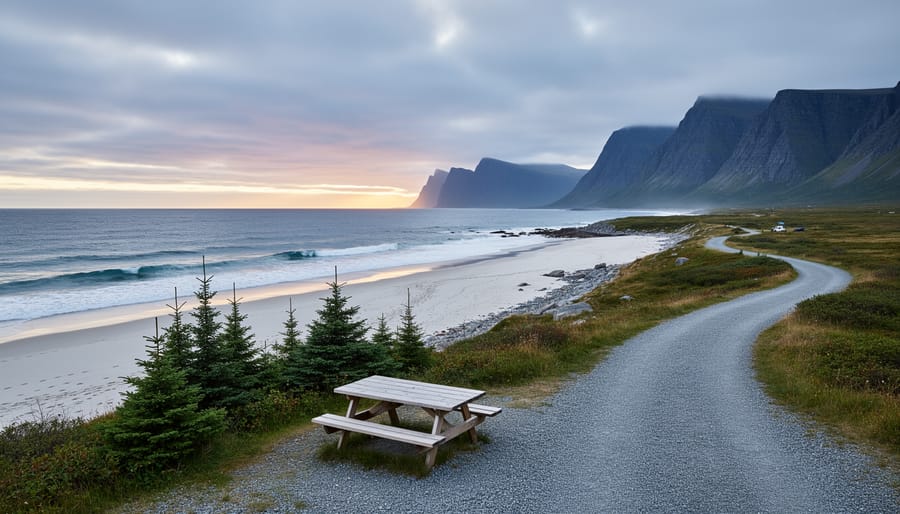
Reservations for Gros Morne National Park’s six campgrounds open Wednesday, February 11, 2026 at 8:30 am Newfoundland Time, and with hundreds of campers competing for prime sites along one of Canada’s most dramatic coastlines, knowing which campground fits your needs and how to navigate the booking system can make the difference between waking up to ocean waves at Shallow Bay or settling for your third choice. The Parks Canada reservation system uses a queue during high-traffic launches to manage the rush, so success requires more than just quick fingers on a keyboard.
Gros Morne stands apart from nearly every other national park in Canada. The UNESCO World Heritage Site unfolds across Newfoundland’s west coast with fjord-carved valleys, windswept barrens that look more like Iceland than North America, and the Tablelands, where the earth’s mantle pushed up through the crust in rust-colored rock formations you can walk right across. Each of the park’s campgrounds offers a completely different experience. Berry Hill and Green Point put you steps from the Gulf of St. Lawrence, while Trout River Pond tucks into a glacial valley beneath towering cliffs. Shallow Bay stretches along a white sand beach that feels impossibly remote, and the backcountry sites in the Long Range Mountains offer true wilderness solitude.
Last year, Sarah Chen from Toronto told us she refreshed the Parks Canada site for thirty minutes before getting through the queue, only to find her preferred Green Point dates already booked. This year, she’s trying a different strategy.
How We Ranked These Campgrounds
Ranking campgrounds isn’t about picking winners and losers, each site at Gros Morne serves different camper priorities. We evaluated all six reservable front-country campgrounds (plus the backcountry option) based on what matters most when you’re choosing where to pitch your tent or park your RV in this UNESCO World Heritage landscape.
Our assessment considered:
- Scenic setting and natural surroundings, coastal beaches versus inland fjords and forested areas
- Proximity to the park’s signature features like Western Brook Pond, the Tablelands, and Green Point
- Campground infrastructure including electrical hookups, showers, laundry facilities, and accessibility
- Suitability for different camping styles, family-friendly amenities versus primitive solitude, RV compatibility versus tent-only sites
- Operating season length and flexibility for trip planning
- Feedback from experienced campers who’ve stayed at multiple Gros Morne campgrounds
All six front-country campgrounds, Berry Hill, Green Point, Shallow Bay, Trout River Pond, Lomond, and the backcountry Long Range Mountains sites, open for reservations during the February 11, 2026 launch at 8:30 AM NT. Understanding what makes each unique helps you prioritize your choices when that booking window opens, because the top-ranked sites fill within hours. We’ve organized this ranking to help you match a campground to your camping style and park priorities rather than chase a single “best” option that might not fit your needs.
1. Green Point Campground, Best for Ocean Views and Geological Wonders
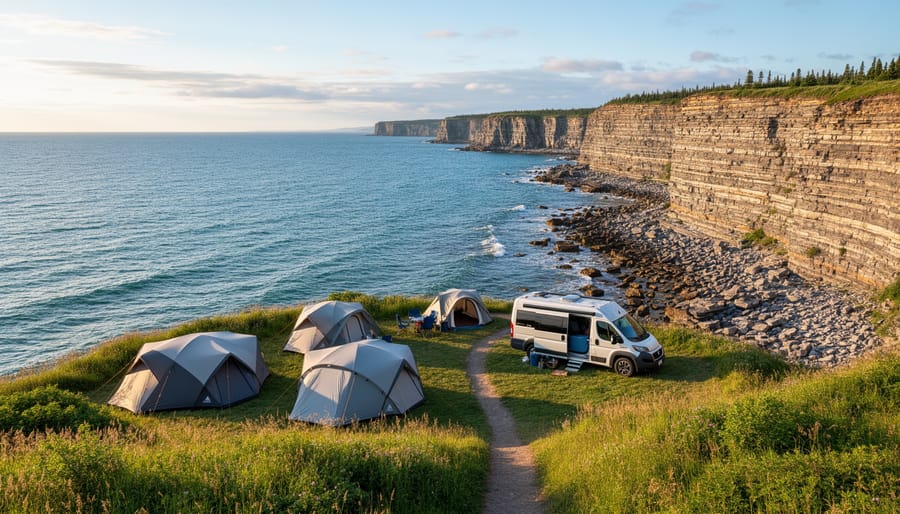
Green Point Campground claims the top spot for one undeniable reason: you wake up to the Gulf of St. Lawrence crashing just steps from your tent or RV. This 18-site campground hugs the coast along Route 430, where the rocky shoreline meets some of the most geologically significant terrain on the planet. The Green Point formation here, layers of ancient ocean floor pushed to the surface, helped earn Gros Morne its UNESCO World Heritage designation, and you’re camping right beside it.
The campground splits between eight serviced sites with electrical hookups (perfect for RVs up to 35 feet) and ten unserviced sites that suit tent campers looking for a more stripped-down experience. Both options deliver the same jaw-dropping ocean access. A short path leads directly to the beach, where you can spend evenings watching the sun melt into the gulf in shades of orange and pink that photographers dream about. During summer months, keep your eyes on the water for humpback and minke whales feeding offshore.
This is exactly why Green Point books out fastest when reservations launch. The combination of ocean frontage, geological significance, and relatively few sites creates fierce competition. Campers who’ve snagged a spot here describe it as the park’s crown jewel for coastal camping.
Sarah Chen from Toronto stayed here last August with her two kids and still talks about their morning ritual: “We’d walk the beach at low tide every day before breakfast. The kids found crabs, periwinkles, and this incredible fossil bed in the rocks. My eight-year-old collected enough shells to fill a shoebox.” The tidepools between the campground and the point reveal a miniature ocean world when the gulf recedes, anemones, tiny fish, and sea stars clinging to the rocks.
If ocean views and geological wonders top your priority list, make Green Point your first choice on February 11.
2. Shallow Bay Campground, Best for Families and Beach Camping
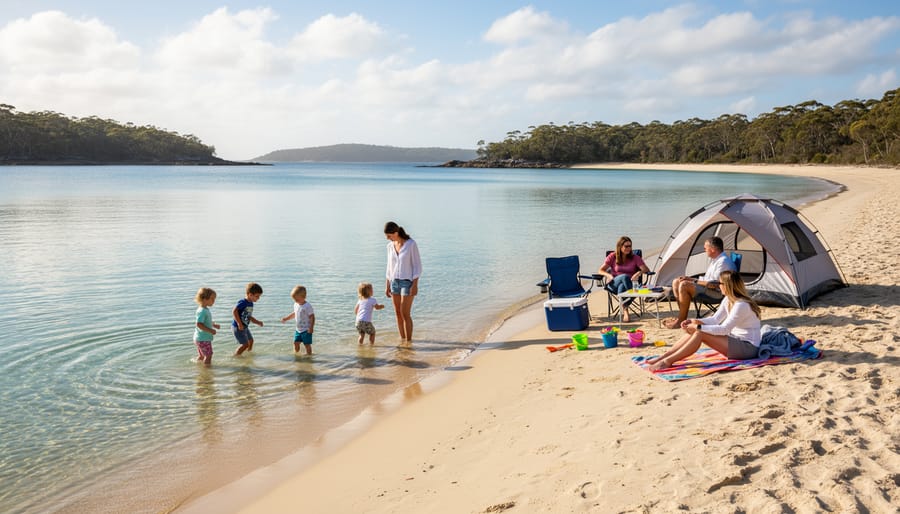
Shallow Bay earns its runner-up spot for one compelling reason: it delivers the quintessential beach camping experience that families dream about. Stretching along one of Gros Morne’s most beautiful sandy beaches, this campground combines kid-friendly swimming with stunning Gulf of St. Lawrence coastline views, a rare combination that makes it worth the competitive booking scramble.
The shallow, gradually sloping shoreline warms faster than deeper waters elsewhere in the park, creating surprisingly comfortable swimming conditions by mid-summer. Kids can wade out dozens of metres while parents relax on the sand, a setup that transforms anxious beach supervision into actual vacation time. Wooden boardwalks wind through protected dunes, offering easy beach access while preserving the fragile coastal ecosystem.
Location matters here. Shallow Bay sits on the park’s northwestern edge near the fishing village of Cow Head, just a ten-minute drive from restaurants, a grocery store, and marine interpretive exhibits. This proximity to supplies and backup dining options removes considerable stress for families managing picky eaters or forgotten camping gear.
First-time Gros Morne visitors particularly appreciate Shallow Bay’s approachability. The campground layout is straightforward, sites accommodate both tents and RVs, and the beach provides instant entertainment when kids tire of hiking. One camper described it perfectly: “Our seven-year-old spent three solid days building sandcastles and hunting for beach glass while we actually finished our coffee hot.”
The extended season, May 22 to September 28, 2026, gives Shallow Bay the longest operating window among the park’s coastal campgrounds, offering more booking flexibility than shorter-season alternatives. That advantage disappears quickly during the February 11 reservation launch, though. Expect Shallow Bay to fill within the first hour for prime summer weeks, particularly July and August dates.
3. Trout River Pond Campground, Best for Tablelands Access and Fjord Views
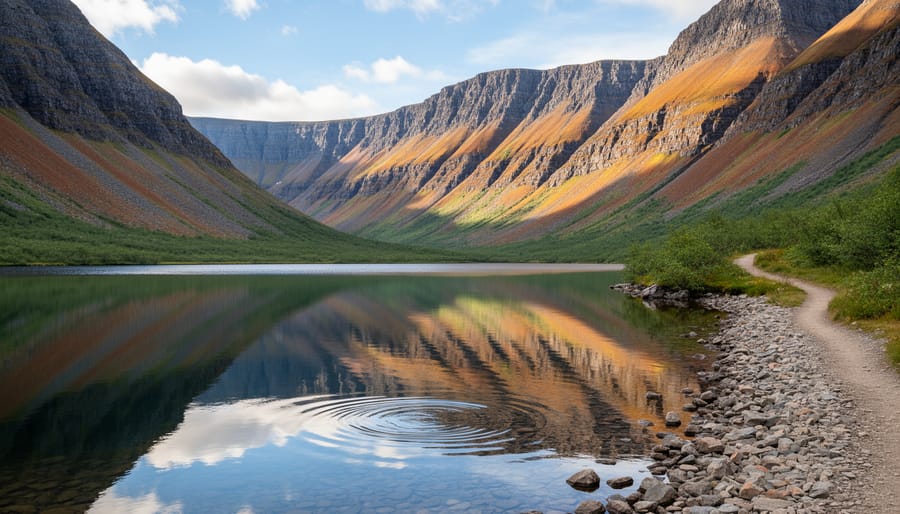
Trout River Pond Campground earns third place for anyone drawn to Gros Morne’s raw geological drama. Tucked at the base of the Tablelands, where ancient oceanic mantle rock rises in burnt-orange cliffs, this campground delivers a landscape unlike anywhere else in North America. The setting feels more remote and quieter than the bustling coastal sites, making it ideal if you prefer solitude over beach crowds.
The campground sits along a glacially-carved fjord with dark water reflecting the russet slopes above. You’re steps from the Tablelands Trail trailhead, where you can hike across barren, rust-coloured terrain that looks more Martian than Canadian. The rock beneath your boots is literally Earth’s interior, pushed to the surface during continental collision 500 million years ago. Geology enthusiasts treat this place like a pilgrimage site.
Trout River Pond boat tours launch from nearby, offering a different perspective on the fjord’s sheer walls and hanging waterfalls. The short drive into Trout River village provides basic supplies and a handful of local restaurants, but you won’t find the amenities or bustle of Rocky Harbour here.
Expect a more rustic camping experience. Sites are basic, the atmosphere leans backcountry without the hike, and wildlife encounters are common in the quieter setting. One camper described waking to fog rolling off the pond while moose grazed at the forest edge, the Tablelands glowing orange in dawn light behind them.
This campground rewards campers who value dramatic scenery and geological wonder over convenience. It typically sees less competition during the February 11 reservation launch than Green Point or Shallow Bay, though serious hikers and geology buffs still grab sites quickly.
4. Berry Hill Campground, Best for Central Location and Amenities
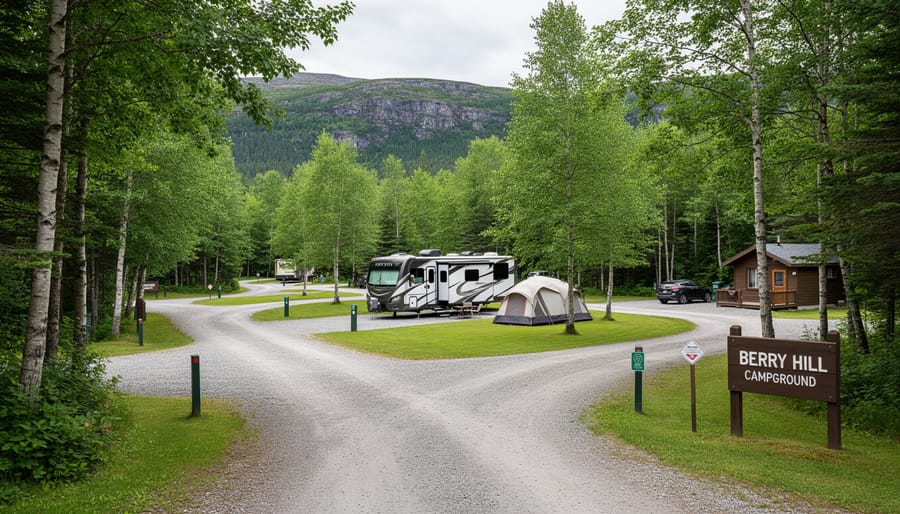
Berry Hill Campground earns fourth place for campers who value convenience and comfort over remote wilderness solitude. Located just minutes from Rocky Harbour, the park’s main service hub, this 159-site campground offers the most amenities of any Gros Morne option, including hot showers, flush toilets, full laundry facilities, and both serviced and unserviced sites accommodating RVs up to 40 feet.
The setting feels less wild than coastal or fjord campgrounds, with wooded loops providing privacy and shade rather than dramatic vistas. What Berry Hill sacrifices in scenery, it gains in practicality. You’re three kilometers from the Discovery Centre, where interactive exhibits explain the park’s geology and ecosystems, and within walking distance of Rocky Harbour’s restaurants, grocery stores, and outfitters. This proximity matters when you need fresh supplies, a hot meal after a long hike, or forgot essential camping safety gear.
Berry Hill shines as a base camp for exploring the entire park. Day trips to Western Brook Pond (30 minutes north), the Tablelands (45 minutes south), and Green Point are all manageable from here without packing up your site. The campground operates from mid-May through late September, giving you flexibility for spring or fall trips when other sites remain closed.
RV travelers appreciate the electrical hookups and level pads, while families with young children value the proximity to town amenities and the short drive to multiple park attractions. It books quickly during the February 11 launch, though not as frantically as Green Point or Shallow Bay.
5. Lomond Campground, Best for Budget Campers and Backcountry Primitive Experience
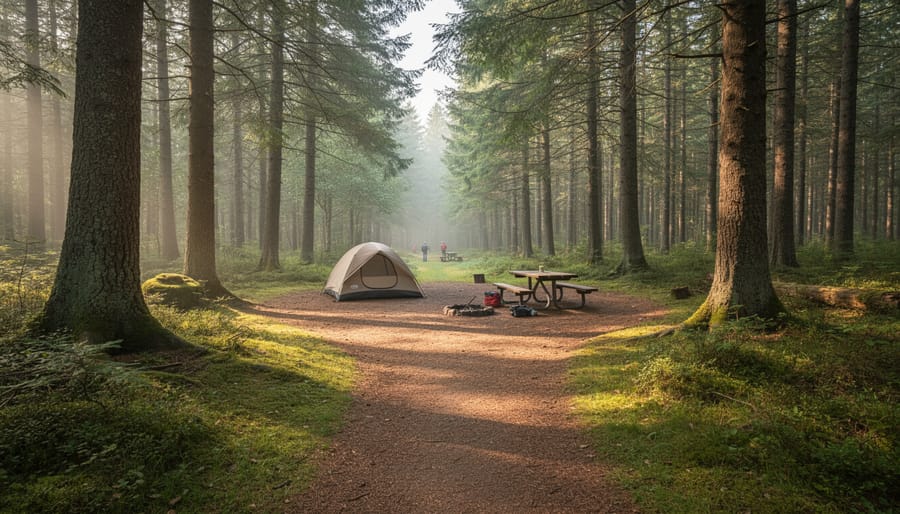
Lomond Campground earns fifth place for campers who want a quieter, more affordable experience without the full commitment of backcountry hiking. Tucked into dense boreal forest near the east arm of Bonne Bay, this primitive campground strips away the conveniences of its higher-ranked siblings in favor of peaceful solitude and a genuine wilderness atmosphere.
The walk-in sites here require a short carry from the parking area, typically 50 to 100 metres through the woods. You won’t find electrical hookups, showers, or flush toilets, just well-spaced tent pads, picnic tables, fire rings, and vault toilets. This setup keeps crowds thin and prices lower, making Lomond an excellent choice for budget-conscious campers who pack light and prefer birds over background noise.
The forested setting delivers on wildlife encounters. Moose are regular visitors, especially at dawn and dusk when they browse near the campsites and along the access road. Black bears also frequent the area, so proper food storage is mandatory. The surrounding spruce and fir forest feels primal, and on quiet mornings the only sounds are wind through the trees and the occasional loon call from nearby ponds.
Unlike Green Point or Shallow Bay, which sell out within minutes when you book Parks Canada reservations, Lomond often has availability well into the booking window. This lower demand makes it ideal for flexible travelers or those who missed the initial rush but still want a genuine park camping experience. If you’re comfortable carrying gear and leaving modern amenities behind, Lomond offers exactly what many campers seek: quiet forest, abundant wildlife, and nights defined by crackling fires rather than nearby generators.
6. Long Range Mountains Backcountry, Best for Experienced Wilderness Campers
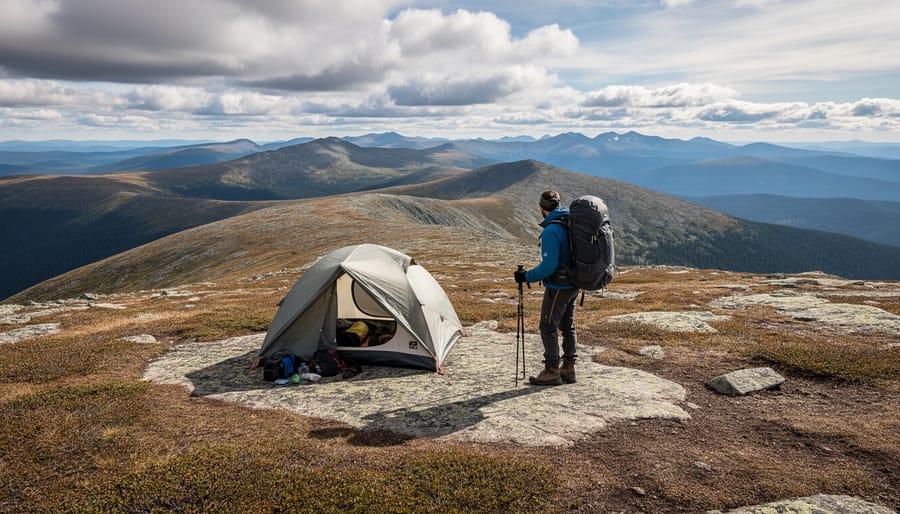
The Long Range Mountains backcountry camping experience stands completely apart from the front-country campgrounds. This is wilderness camping at its most demanding and rewarding, taking you above treeline into an Arctic-alpine environment where caribou roam and ancient rock formations stretch to the horizon. You’ll need to earn these views through challenging multi-day hikes across exposed plateau terrain, carrying everything on your back and navigating by map and compass through landscapes that haven’t changed in millennia.
Access requires hiking the North Rim Traverse or Long Range Traverse, multi-day routes that climb steeply from coastal lowlands to plateau elevations above 600 metres. The trails follow poorly defined paths across open barrens and tuckamore (stunted spruce) before emerging onto the alpine plateau. Count on 10 to 15 kilometres per day with a full pack, and be prepared for slow going over uneven terrain, wet sections, and scrambles over rocky outcrops. This isn’t a weekend trip for casual campers, it’s a serious backcountry undertaking that demands fitness, experience, and self-sufficiency.
The camping itself offers no amenities whatsoever. You’ll pitch your tent on exposed rock or tundra wherever you find flat ground and shelter from the wind. There are no facilities, no marked sites, and certainly no electric hookups like front-country campgrounds offer. Water sources are seasonal streams and ponds that require filtration. You need a bear canister for food storage and must be completely self-reliant for emergencies, as help can be days away.
Book your backcountry permit through the same February 11, 2026 reservation system as front-country sites. You’ll need to specify your route, dates, and group size. Parks Canada requires you to register your trip plan and check in upon completion. Strong map and compass skills are mandatory, the plateau has few landmarks and GPS batteries fail in cold weather. Only experienced backpackers who’ve done multi-day trips in exposed conditions should attempt this route, but those who do gain access to Gros Morne’s most pristine and dramatic wilderness.
How to Secure Your Spot: Booking Strategy for 2026
The February 11, 2026 reservation launch at 8:30 AM Newfoundland Time will determine whether you snag your ideal campsite or scramble for alternatives. Parks Canada uses a queue system on high-traffic launch days to manage the flood of eager campers, which means you’ll join a virtual waiting room before accessing the booking system. Don’t wait until launch morning to figure this out.
You have two booking methods: the online Reservation Service (which most campers prefer for its visual site selection) or phone at 1-877-737-3783 (international callers can use 1-519-826-5391). The phone lines handle lower volume, so if the online queue looks impossibly long, dialing in might get you through faster. Have both options ready.
Preparation makes the difference between securing Green Point’s oceanfront sites and settling for whatever’s left. Start now:
- Create your Parks Canada account today so you’re not fumbling with registration during the launch rush
- Choose at least three campground options ranked by preference, with specific date ranges for each
- Know your exact travel dates but build in flexibility, a Tuesday arrival often has better availability than Friday
- Set multiple alarms for 8:20 AM NT on February 11 to be logged in and ready before the 8:30 AM start
- Have your payment method information accessible and confirmed working
- Consider mid-week or early-season dates (late May, early June) for significantly better availability
Green Point and Shallow Bay typically sell out within the first hour, sometimes faster for peak summer weeks. If you’re dreaming of beachfront camping, make one of these your first choice but have Trout River Pond or Lomond as realistic backups. The queue doesn’t guarantee success, it just means you’ll wait your turn for a shot at what’s left.
Once you’re through the queue, work quickly. Other campers are selecting sites simultaneously, and hesitation costs you options. If your first-choice campground shows no availability for your dates, immediately pivot to your backup rather than refreshing repeatedly. You can always check back for cancellations as your trip approaches, and those backup sites still offer incredible access to everything that makes Gros Morne spectacular. Planning your summer camping ideas around flexible dates gives you the best chance at reservation success.
What to Know Before You Book
Before you commit to a specific campground on February 11, take time to match each site’s strengths to your camping style and park priorities. RV campers need to verify length restrictions, as some sites at Green Point and Lomond can’t accommodate larger rigs, while Berry Hill and Shallow Bay offer more spacious pull-through options. Your choice of campground will shape your park experience: Green Point and Shallow Bay put you right on the coast for sunrise beach walks and marine wildlife, Trout River Pond positions you at the doorstep of the Tablelands for geology hikes, and Berry Hill serves as a central hub with easy access to Rocky Harbour’s restaurants and the Discovery Centre.
Operating seasons vary more than you might expect. Shallow Bay runs the longest season (May 22 to September 28, 2026), making it ideal for early or late-season trips, while others may close earlier in September. If you’re planning a week or more in the park, consider splitting your stay between two campgrounds rather than booking one long stretch at a single site. A few nights at coastal Green Point followed by a stay at inland Trout River Pond lets you experience dramatically different landscapes and reduces travel time to opposite ends of the park. This strategy also gives you two chances during the booking launch, since you’re not putting all your hopes on one sold-out campground.
We haven’t listed specific nightly fees here because Parks Canada adjusts pricing periodically. Check their official website for current 2026 rates before booking so you know exactly what you’ll pay for serviced versus unserviced sites.
Frequently Asked Questions
Booking a campsite at Gros Morne often raises practical questions, especially with the competitive reservation launch. Here are answers to the most common concerns.
When do Gros Morne campground reservations open?
Reservations for the 2026 season launch on Wednesday, February 11, 2026 at 8:30 AM NT. All six campgrounds become available simultaneously through the Parks Canada system.
Can I book by phone instead of online?
Yes, call 1-877-737-3783 (or 1-519-826-5391 from outside North America) starting at the same 8:30 AM NT launch time. Both methods access the same inventory.
Which campground works best for families with young children?
Shallow Bay offers the warmest, shallowest beach water and a sandy shoreline perfect for kids. Berry Hill provides the most amenities including showers and proximity to Rocky Harbour services.
Do I need a reservation for backcountry camping?
Yes, backcountry permits for both Lomond Backcountry-Primitive and Long Range Mountains are booked through the same Parks Canada system as front-country sites.
If your first-choice campground sells out during the launch, Lomond and Trout River Pond typically have better availability than the coastal sites. Check back periodically for cancellations as travel dates approach, since campers often adjust their plans and release prime spots.
Landing a campsite in Gros Morne National Park requires preparation, but the effort pays off the moment you wake up to ocean waves or alpine vistas. Whether you snag oceanfront perfection at Green Point, family-friendly beaches at Shallow Bay, or quiet solitude at Lomond, you’re camping in one of the world’s most geologically significant landscapes.
Mark February 11, 2026 at 8:30 AM NT on your calendar right now. That reservation launch date is your gateway to summer adventure, and going in with a flexible strategy, multiple campground preferences, backup dates, and your Parks Canada account ready, dramatically improves your odds.
Don’t let the competitive booking process discourage you. Every campground on this list delivers something special, from the Tablelands’ otherworldly terrain to the Gulf’s endless sunsets. Even if your first choice fills up, your backup will still put you inside a UNESCO World Heritage site where fjords, mountains, and coastline converge.
Get your booking strategy sorted now. Research your preferred campgrounds, prepare your dates, and set your alarm. Your Newfoundland camping adventure is just one successful reservation away.