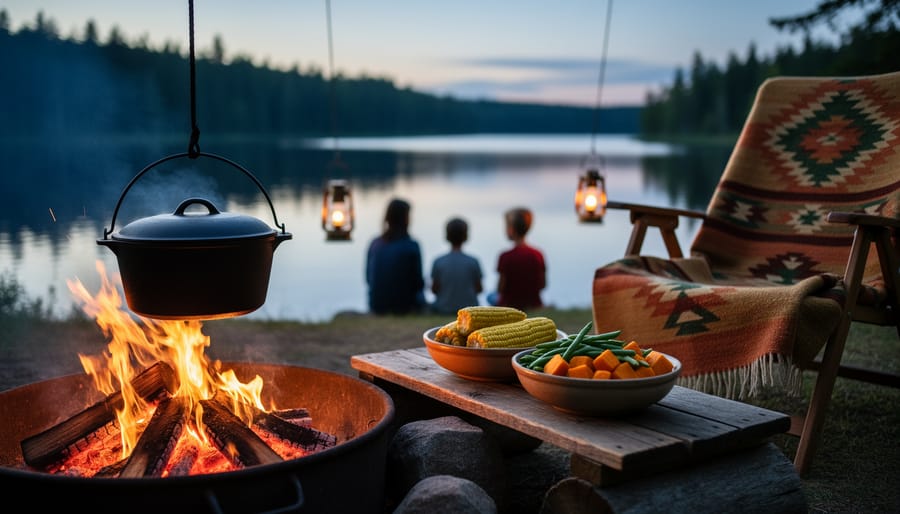
Camping Aztec isn’t a single campground, it’s a theme, and it’s one of the easiest ways to make a summer trip feel like an adventure. Think warm sun-inspired colours, a corn, bean and squash dinner over the fire, hot chocolate nodding to Mesoamerican cacao, and a night of legends beside the lake. Every idea below works at a regular Canadian campground, needs no special gear, and takes little more than a bit of planning and a sense of play.
The Aztec link is mostly about inspiration, so you can borrow what suits your crew. Some families lean into stargazing and sky stories at a dark-sky site. Others send the kids off on a nature treasure hunt, then hike to a lookout for a “pyramid view” panorama. All of it comes down to choosing activities that fit your campground’s rules, the weather and the people you’re bringing.
Canadian camping adds its own ground rules. Check fire bans before you plan any cooking, store food securely so you don’t draw bears, raccoons or other curious wildlife, and keep a respectful distance if you spot a moose or loon on the shoreline. Our eight ideas are chosen with those realities in mind. Start with the one that sounds most fun and build your trip from there.
How We Picked These Aztec-Inspired Camping Ideas for Canadian Summers
We built this list around what actually works at a Canadian campsite, not around hands-on testing of each idea. Every pick had to clear the same bar:
- Canadian campground-friendly: it works within typical provincial and national park rules.
- Beginner-friendly: families and first-timers can pull it off without special skills.
- Budget-conscious: it relies on cheap, simple gear you probably own already.
- Safety-aware: it respects fire, food, sun and wildlife precautions.
- Culturally respectful: it honours the traditions it borrows from.
- Summer-ready: it suits warm days, cool lake evenings and changeable Canadian weather.
That last point matters more than you’d think. A July afternoon can swing from hot sun to a cold, windy night on the water, so ideas like campfire hot chocolate and sky-watching earned their spots for exactly that reason. We also kept wildlife in mind, since anything involving food or crafts has to stay bear-aware and low impact.
A quick word on respect. Aztec and wider Mesoamerican cultures are real, living heritage, not a costume party. Take a few minutes to learn the history behind an idea before you borrow from it, and skip feathered headdresses, face paint and other stereotypes. Think of the theme as inspiration, such as colours, foods, stories and star lore, rather than imitation.
Finally, check before you book. Every campground sets its own rules on open fires, quiet hours and what you can hang or set up on your site, and fire bans can pop up with little notice in dry summers. A quick look at the park’s policies keeps your trip stress-free and your theme welcome.
8 Summer Camping Ideas to Bring the Aztec Spirit to Your Campsite
1. Sun-Inspired Campsite Setup with Warm Colours and Natural Decor
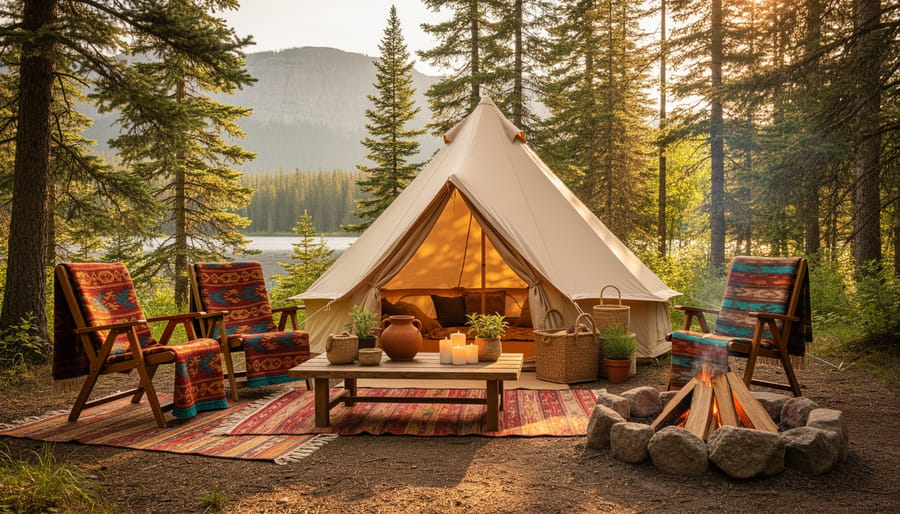
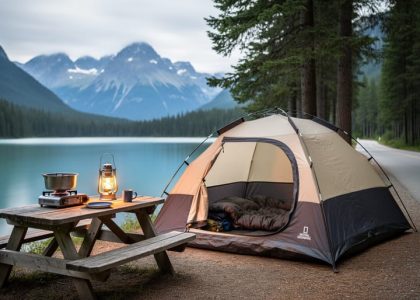
A sun-themed campsite is the easiest way to make the Aztec idea feel real, and it costs far less than most people expect. Start with a palette of terracotta, gold and turquoise. Think woven blankets over picnic tables, a striped tarp for shade, and a few cotton cushions around the fire ring. Thrift shops and dollar stores are goldmines for this, so you rarely need to buy anything new.
Add light as the evening settles in. Battery-powered lanterns and solar string lights give a warm, golden glow without any open flame near your tent, and they’re far safer around kids and dry summer brush. Paper bunting in sunburst shapes can be made at home the night before you leave.
One family from Ontario told us they turned their site at a provincial park on Lake Huron into a “sun camp.” Their kids painted cardboard suns and hung them from a clothesline strung between two trees. “By sunset the whole site glowed orange,” the mum said, “and the neighbours kept stopping by to ask how we did it.”
Wind is the real challenge. Lakeside sites can get gusty, so anchor everything. Use tent pegs or ground stakes for bunting lines, weigh down tablecloths with clips or rocks from the site, and take decor down if the forecast turns stormy.
Before you hang anything, check the campground’s rules. Many parks ban nailing or tying items to living trees, so use freestanding poles or your own gear instead. Follow Leave No Trace: pack in what you bring, pack it all out, and leave the site looking as natural as you found it.
2. Campfire Cooking with Maize, Beans and Squash
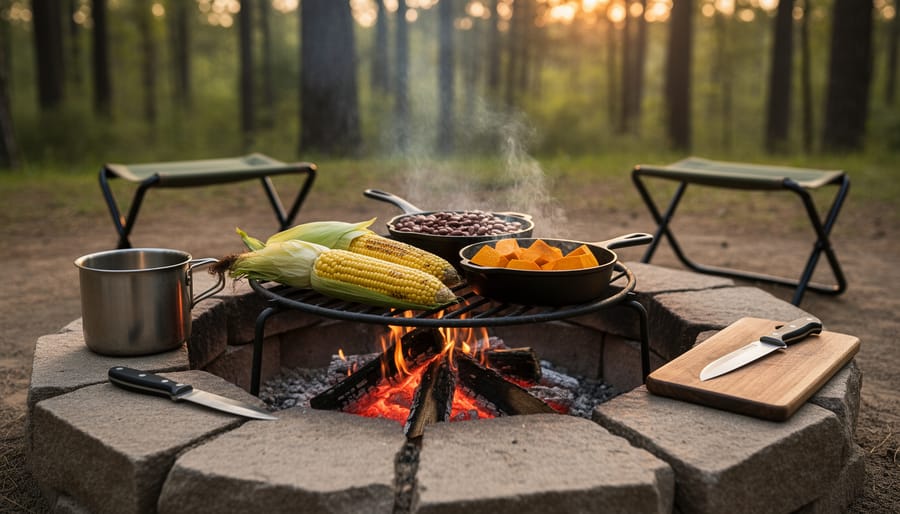
Corn, beans and squash, known as the Three Sisters, are a natural fit for a campfire menu. They grow well together, they cook well together, and they pack easily in a cooler.
Start with a foil-pack. Slice a small zucchini or summer squash, add a cob of corn cut into rounds, a handful of canned black beans (drained and rinsed), a spoonful of butter or oil, and a pinch of cumin or chili flakes. Seal it tightly in a double layer of foil and set it on hot coals for 20 to 25 minutes. Want something heartier? Brown some onions in a cast-iron skillet, add beans, diced squash and corn kernels, then cover with a lid and let it simmer into a smoky, one-pan stew.
For the Canadian twist, stop at a roadside farm stand on the way to your site. July and August bring sweet corn, zucchini and fresh beans to farms across Ontario, Quebec and the Prairies, and the flavour beats anything from the grocery store. Pick up a few extras and you’ve got breakfast hash sorted for the next morning.
Keep your menu simple on travel day by pairing it with easy cold options like these no-refrigeration lunches so your fresh produce stays cold until dinner.
Finish by keeping raw produce and cooked food separate, wash your hands before handling ingredients, and cook beans until they’re steaming hot throughout. Clean up right after dinner so lingering smells don’t draw in raccoons, skunks or bears.
3. Campfire Hot Chocolate Night, Inspired by Mesoamerican Cacao
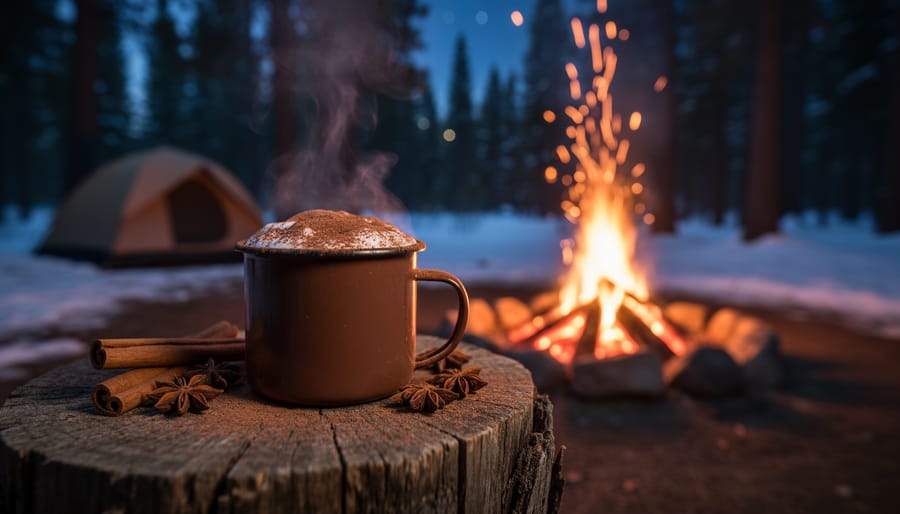
Long before hot chocolate came in a paper packet, cacao was a drink of the Mesoamerican world. The Maya and, later, the Aztecs ground roasted cacao beans into a paste, whisked it with water into a thick, frothy drink, and often seasoned it with chili, vanilla or flower petals. It was a bitter, warming brew rather than a sweet one, and it was valued enough that cacao beans were used as currency.
That makes it a perfect campfire tradition. Even in July, evenings beside a Canadian lake or high in the Rockies can drop to the single digits, and a mug of something hot goes a long way once the sun slips behind the trees.
Here’s a simple version for four people:
– Warm 4 cups of milk (or a plant-based milk) in a pot over a camp stove or on a grate above the coals. Keep it at a gentle simmer, not a rolling boil.
– Whisk in 4 tablespoons of cocoa powder and 3 tablespoons of sugar or maple syrup.
– Add one cinnamon stick, a small pinch of chili powder or cayenne, and a splash of vanilla.
– Whisk well until frothy, then taste and adjust. Go easy on the chili for kids.
Let the little ones take turns whisking and guess the secret spice. Keep the pot well away from small hands, use a heat-proof handle grip, and let mugs cool for a minute before the first sip.
4. Stargazing and Sky Stories at a Dark-Sky Campground
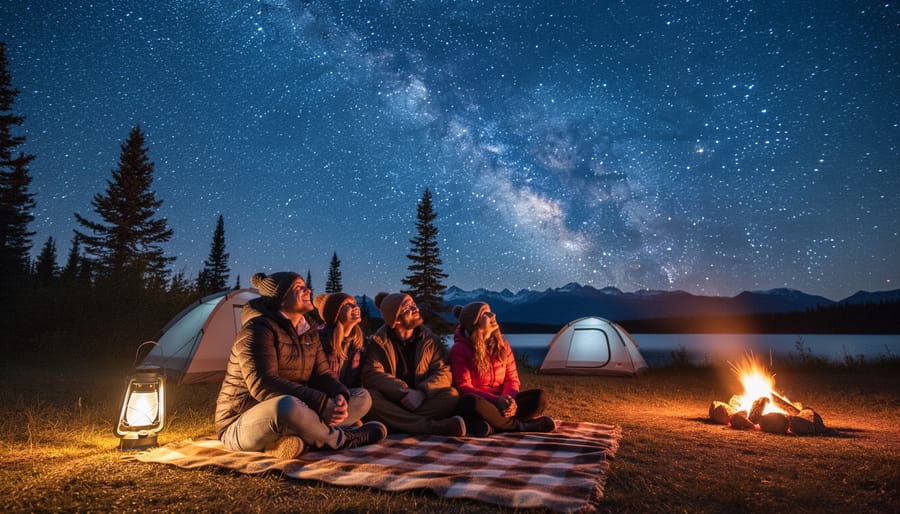
Many Mesoamerican cultures watched the sky with real care. The Maya and Aztec tracked the sun, the moon and bright planets like Venus, and they built calendars around what they saw. You can borrow a little of that curiosity for one summer night, and a dark campground makes it easy.
Canada has some of the best dark skies anywhere. Dark-sky preserves like Jasper National Park, Cypress Hills Interprovincial Park, Point Pelee and Mont-Mégantic in Quebec protect the night from light pollution. Many provincial parks hold stargazing events in July and August, so check the park’s event calendar before you book.
A few beginner tips make the night much better:
– Arrive before sunset and scout an open spot away from lanterns and car headlights.
– Give your eyes 20 to 30 minutes to adjust to the dark. Cover a regular flashlight with red cellophane, or use a red-light headlamp, so you don’t ruin your night vision.
– Download a star chart app before you leave, since cell service is patchy at many campgrounds.
– Pack a blanket or reclining chair, plus a warm layer. Summer nights get cool fast.
– Check the moon phase. A new moon gives you the darkest sky.
Dana, a camper from Alberta, told us about her first trip to a dark-sky park with her two kids. They lay on a picnic blanket by the lake, and as their eyes adjusted, the Milky Way slowly appeared overhead like a pale stripe of cloud. “My eight-year-old whispered, ‘Mom, is that all stars?'” she said. “Nobody wanted to go to bed.”
5. Nature Treasure Hunt and Pattern-Art Craft Time for Kids
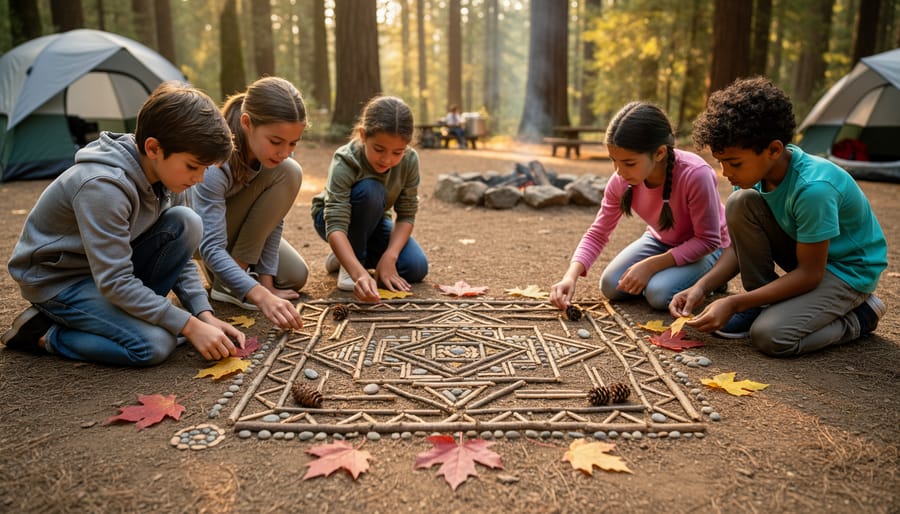
Kids love a mission, and this one turns a quiet afternoon at the campsite into a hunt with a creative payoff. Hand each child a small bag or cardboard tray and send them looking for fallen leaves, strips of loose bark, pinecones, pebbles and feathers. The rule is simple: only pick up what’s already on the ground. Living plants, mossy logs, nests and anything in a marked protected area stay exactly as they are. Many Canadian parks also ask visitors not to remove natural items at all, so check the posted rules first.
Once the haul is in, head to a flat picnic table or a spare tarp. Mesoamerican art is full of bold zigzags, stepped shapes, spirals and sun-like circles, which makes it easy for little hands to copy. Have kids lay out stones as a stepped pyramid, arrange leaves into a repeating border, or build a sun face from pinecone scales and pebbles. Older kids can do bark rubbings by pressing paper over a textured piece and scribbling lightly with a crayon.
The best part is that nothing is permanent. Snap a photo of each creation, then scatter every piece back where it was found before you pack up. Kids learn to leave a site just as they found it, and you get a gallery of tiny masterpieces for the car ride home.
6. Trail-Day Adventures: Hike to a Lookout for ‘Pyramid View’ Panoramas
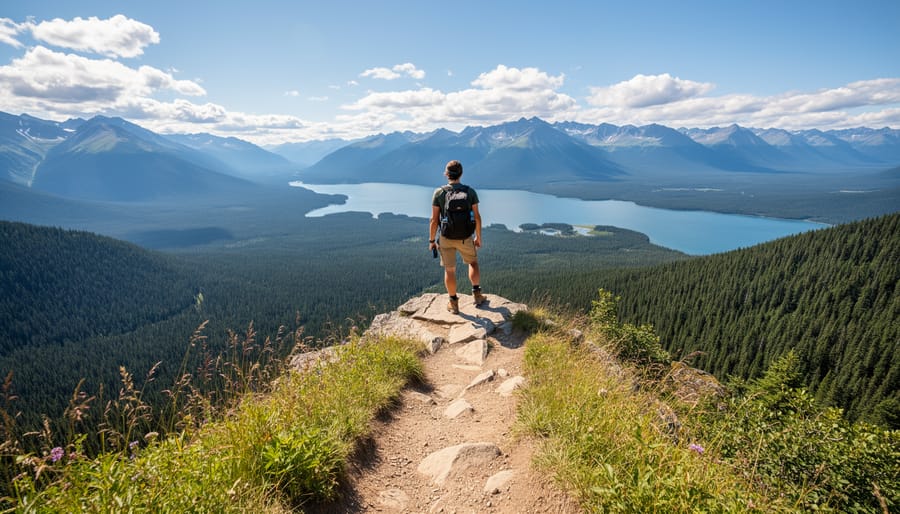
Some of the best summer days at a campsite start with a quest: pick a lookout, lace up, and treat the summit as your own “pyramid view.” Choose a moderate trail with a clear payoff at the top, a rocky outcrop, a fire tower or a ridge that opens up over a lake. Kids love having a goal, and adults love the quiet that comes with it.
Pick a route that suits the slowest walker in your group, and give yourself more time than the trail sign suggests. The way down always feels longer when everyone’s tired.
Canadian trails add a bonus: wildlife. A boreal path edged with wetland or a lakeside trail is a good place to spot loons drifting offshore, beaver lodges and, with some luck and patience, a moose feeding in the shallows at dawn or dusk. Stay well back. A good rule is to keep at least 100 metres from large animals like moose and bears, and to use binoculars or a camera zoom instead of walking closer. Never feed or approach any wildlife, however calm it looks.
Before you head out, run through this quick checklist:
- Pack more water than you think you’ll need, plus snacks.
- Bring layers, since summit breezes can feel cool even on warm days.
- Carry a trail map or an offline route in case you lose signal.
- Use bug protection and sunscreen, and wear a hat.
- Keep your distance from wildlife and make some noise on the trail.
- Tell someone your route and when you expect to be back.
When you reach the top, take a moment to soak it in. Snap the photo, share the snacks, and let the kids name the view. Then start back early enough to be at camp before the light fades.
7. Lakeside Storytelling and Legends Night
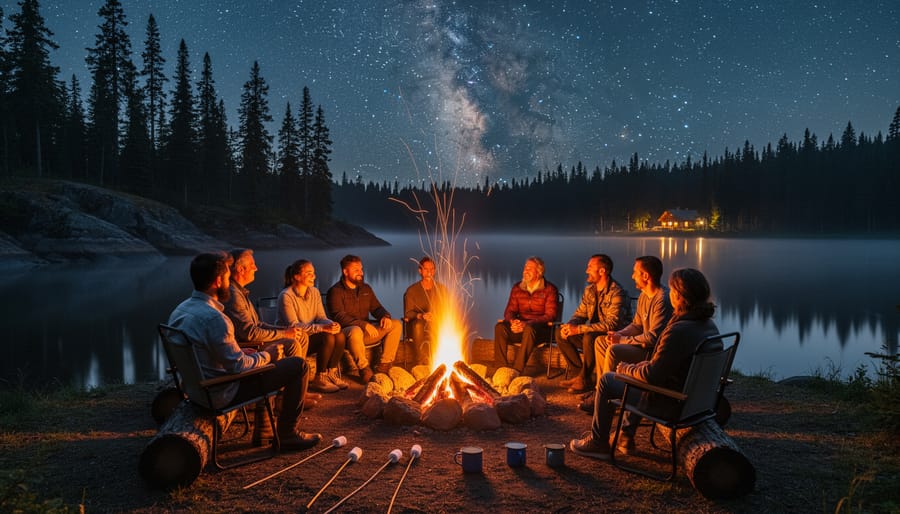
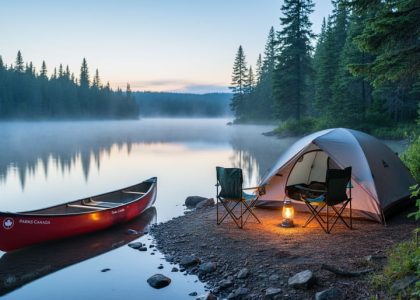
As the sun slips behind the treeline and the lake turns to hammered gold, the campfire becomes the best stage you’ll ever have. A storytelling night asks for no gear at all, just a cozy circle, a few good tales and willing listeners.
Start with a Mesoamerican legend that suits your crowd. The story of the Fifth Sun, which tells how the world was remade and the sun set moving across the sky, pairs beautifully with a darkening lake. For younger kids, keep it short and focus on wonder rather than the darker details. Tell these stories with care. They belong to living cultures, so say where they come from, avoid cartoonish voices, and skip the costumes.
Then pass the storytelling stick. Invite everyone to share a real tale, whether it’s the time a loon called right beside the canoe or the worst tent-pitching disaster in family history. These are usually the stories people remember longest.
You’re also camping on land with its own deep storytelling traditions. Before your trip, check the visitor centre or park website to learn whose traditional territory you’ll be visiting. Many parks offer Indigenous-led programs, guided walks and campfire talks. Hearing local stories from the people who carry them is far better than retelling them secondhand, so attend a session, listen closely, and let it shape your evening.
Keep the fire small, mind quiet hours, and let the lake do the rest.
8. Backyard-to-Backcountry Games: Camp Ball Games and Scavenger Races
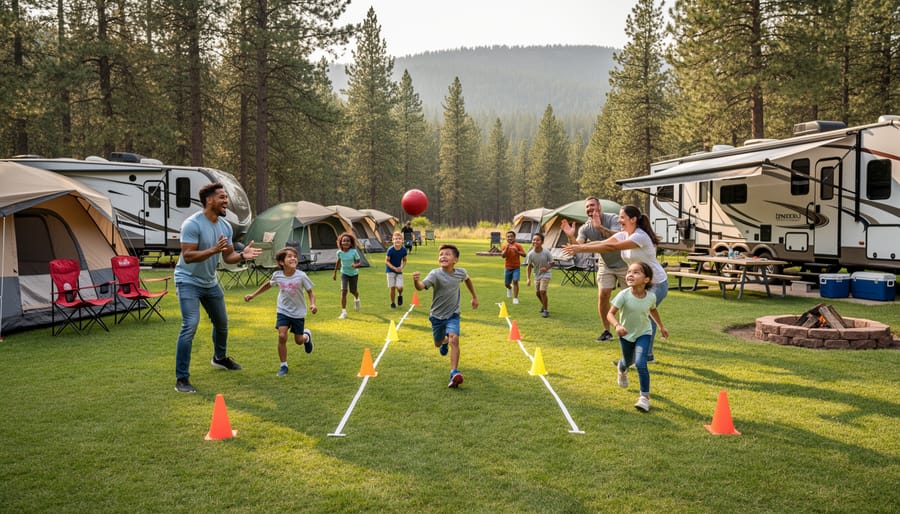
The ancient Mesoamerican ball game, played for centuries across the region, was part sport and part ceremony. You don’t need a stone court to borrow the spirit of it. All you need is an open stretch of grass, a beach, or a quiet corner of the campground field.
Start with a soft foam ball and set up two teams. The goal is simple: keep the ball moving and passing it with hips, shoulders and knees (no hands!), which gets kids laughing fast. If that feels too tricky, let players use their hands and play it like a relay. Beanbags work well for target toss, where teams earn points by landing them inside a ring of rope or a hat.
For a scavenger race, give each team a list of natural-colour finds, like something smooth, something golden, or something green, and let them race to spot (not pick) each one. It’s a nice way to slow down and notice the forest around you.
A few safety reminders keep the fun going. Campground fields are often uneven, so walk the area first and watch for roots, holes and rocks. Summer sun in Canada can be stronger than it feels, so bring hats, sunscreen and plenty of water, and take shade breaks. Finally, keep games well away from other sites and wrap up before quiet hours begin.
Planning Your Aztec-Themed Camping Trip: Booking, Gear and Seasonal Tips
Once you’ve picked a few ideas, the trip is mostly about finding the right site. Start with the interactive maps on Canadian Forest Camping and filter by what your theme needs. A fire pit is a must for the hot chocolate night and the campfire cooking. A lakeside spot suits storytelling and a sunset setup. If stargazing is the goal, look for sites away from town lights, and check each campground’s notes on dark-sky access. Real-time availability shows what’s open right now, so you won’t waste time on sites that are already gone.
Book early. July and August weekends fill up fast, and the best lakeside and wooded sites go first. If you want to run a speaker for a legends night or keep a cooler cold, campsites with electricity make life easier, though they’re optional for most of these ideas.
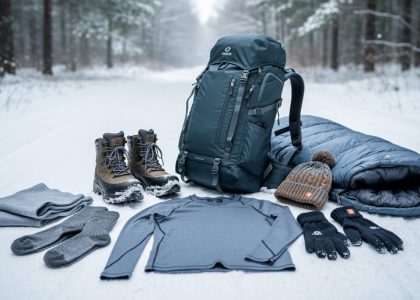
Canadian summer weather can swing from hot afternoons to chilly nights near water, so pack in layers. Bring a warm sweater, rain gear, sun protection, bug spray and plenty of water. Heavy-duty stakes or sandbags will keep your decor and tarps from blowing away.
Before you arrive, read the campground’s rules on decor, open fires and quiet hours. Fire bans can pop up in dry spells, so have a camp stove ready for cooking and hot drinks, and save the fire-based ideas for when they’re allowed.
Aztec-Style Camping: Your Questions Answered
What does “camping Aztec” actually mean?
It isn’t an established camping style, so we treat it as an Aztec-inspired theme: warm colours, corn-bean-squash cooking, stargazing and storytelling at a regular campsite. If you were searching for a place called Aztec, check the campground name and location before you book.
Is there an Aztec-themed campground in Canada?
Not that we know of. The good news is you don’t need one, since every idea in this list works at an ordinary Canadian campsite.
How do I keep the theme respectful?
Learn a little real history first, and skip costumes or caricatures. Treat Mesoamerican stories and foods as something to appreciate, not a prop.
What if there’s a fire ban?
Follow it, no exceptions. Move your cooking to a camp stove where stoves are permitted, and lean on the lantern-lit setup, stargazing and storytelling ideas.
Most of these ideas fit provincial and national parks nicely, because they rely on simple gear and low-impact activities. Just check each park’s rules on decor, noise and fires before you go, and book early for peak July and August weekends. Our guide to Parks Canada reservations walks you through the booking process step by step.
As for beginners and kids, they’re a great fit. Treasure hunts, hot chocolate nights and lakeside stories need almost no experience, and you can pick just one or two for your first trip. Start small, keep an eye on sun exposure and uneven ground, and let the kids lead the fun.
An Aztec-inspired theme is one of the easiest ways to freshen up a summer camping trip. You don’t need special gear or a big budget, just a bit of curiosity, a few warm-coloured touches, and a campfire to gather around. Start small, and you’ll probably find the stories and flavours become the part everyone remembers most.
Ready to give it a go? Browse Canadian Forest Camping’s interactive map and real-time availability to find a site with the right fit, whether that’s a lakeside spot or a campground with a dark sky overhead. And if you’re still gathering inspiration for your trip, here are more summer camping ideas to build your plans around.